




 BOM
BOM Cart
Cart Product Catalog
The CP2102 USB to UART converter board is one of the most widely used USB-to-serial communication modules in embedded systems and microcontroller development. It is based on the CP2102 driver chip and allows computers to communicate with UART-based devices through a USB interface.
The module commonly use with Arduino boards, ESP32 development boards, STM32 microcontrollers, GPS modules, routers, serial debugging tools, and many other embedded applications.
The CP2102 integrates a USB 2.0 full-speed function controller, USB transceiver, oscillator, EEPROM, and UART interface into a single compact chip, reducing the need for external components and simplifying circuit design.
2. CP2102 UART Module Board Pinout
3. CP2102 Driver Specifications
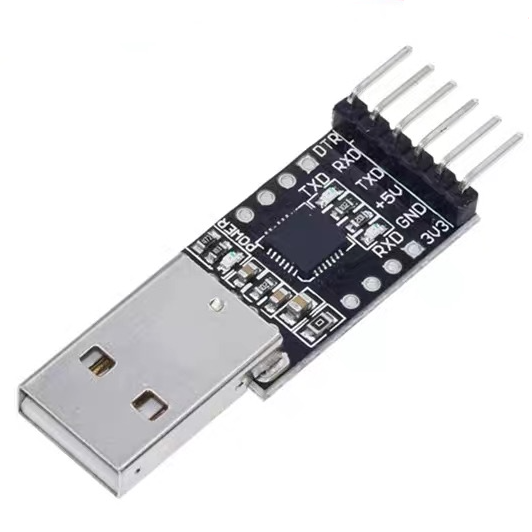
CP2102 UART Module
The CP2102 board is a highly integrated USB-to-serial communication module based on the CP 2102 chip. The circuit integrates a USB 2.0 full-speed function controller, USB transceiver, crystal oscillator, EEPROM memory, and asynchronous serial communication bus (UART) into a single compact device. It also supports full modem control signals without requiring any external USB circuitry.
The working principle of the CP2102 is similar to other USB-to-UART converter circuits. After installing the driver, the computer recognizes the module as a virtual COM port, allowing the PC USB interface to communicate with UART-based devices such as microcontrollers, Arduino boards, ESP32 modules, GPS modules, and various embedded systems.
Because of its compact design, stable performance, and easy driver support, the CP 2102 module widely use in serial debugging, firmware downloading, embedded development, and USB-to-TTL communication applications.
CP2102 UART Module Board Pinout
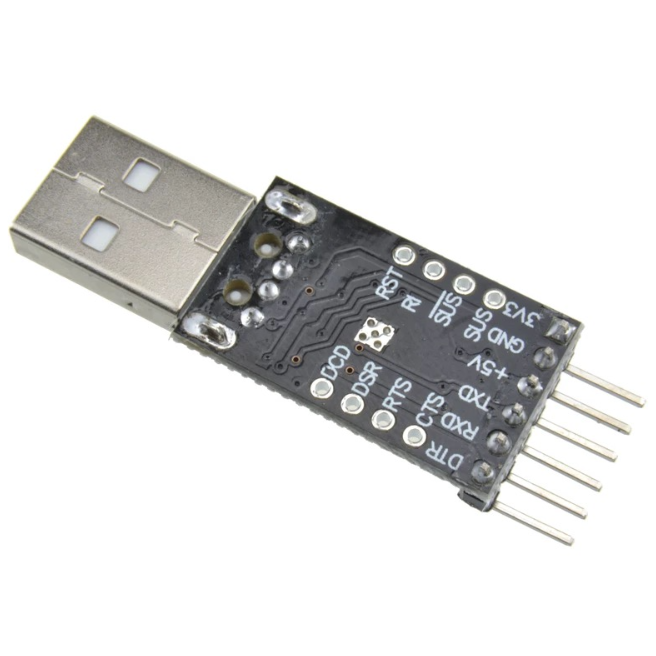
Pin Name | Description |
VCCIO | Jumper configurable VCC output pin (3.3V or 5V) |
GND | Ground connection |
PWR LED | Power indicator LED |
TxD | Asynchronous data output (UART transmit) |
Tx LED | UART transmit data indicator LED |
RxD | Asynchronous data input (UART receive) |
Rx LED | UART receive data indicator LED |
RTS | Ready To Send control output (active low) |
CTS | Clear To Send control input (active low) |
GND | Ground connection |
RESET | Device reset pin. The open-drain output of the internal POR or VDD monitor. An external source can reset the device by driving this pin low for at least 15 μs. |
SUSPEND | Driven low when the CP2102 enters USB suspend mode |
SUSPEND | Driven high when the CP2102 enters USB suspend state |
RI | Ring Indicator control input (active low) |
DCD | Data Carrier Detect control input (active low) |
DTR | Data Terminal Ready control output (active low) |
DSR | Data Set Ready control input (active low) |
CP2102 Driver Specifications
The USB to UART Converter Module design for stable and convenient USB-to-serial communication. After installing the driver, the module is recognized by the computer as a virtual COM port, allowing direct communication with UART-based devices such as Arduino, ESP32, STM32, and other microcontrollers.
One of the main advantages of the module is its simple plug-and-play design. It draws power directly from the USB port and provides selectable 3.3V and 5V outputs, making it compatible with a wide range of development boards and embedded systems.
The module includes a built-in resettable fuse that helps protect both the USB port and the module itself from accidental short circuits or overcurrent conditions. This protection improves reliability during development and testing.
To make operation easier, the board features multiple status LEDs, including:
· Power indicator LED
· TX transmit indicator LED
· RX receive indicator LED
When install the driver correctly, the power LED remains continuously lit. During serial communication, the TX and RX LEDs flash to indicate data activity. At higher baud rates, the LEDs appear dimmer because of the faster signal switching speed.
The CP2102 supports a wide baud rate range from 300 bps up to 1 Mbps, making it suitable for both low-speed and high-speed serial communication applications.
The module also supports flexible UART communication formats, including:
· 5, 6, 7, or 8 data bits
· 1, 1.5, or 2 stop bits
· Multiple parity modes such as odd, even, mark, space, and none
In compatibility, the CP2102 driver supports a variety of operating systems, including:
· Windows
· Linux
· macOS
· Windows CE
The board manufacture using SMT (Surface Mount Technology), which improves production consistency and long-term stability. Its compact size and lightweight design make it easy to integrate into portable and embedded projects.
Another useful feature is the onboard reset signal output. This allows the module to directly upload firmware to boards such as the Arduino Pro Mini without requiring additional reset circuitry.
With stable drivers, broad operating system support, protection circuitry, and flexible voltage options, the CP 2102 remains one of the most popular USB-to-UART solutions for electronics development and serial debugging.
CP2102 Features
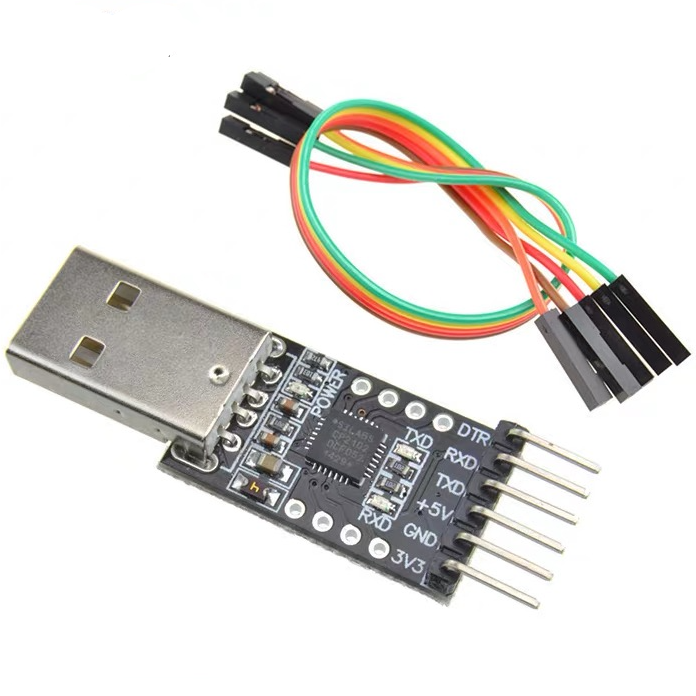
The USB to UART Converter Module includes many built-in functions that simplify circuit design and improve communication reliability. Its high level of integration eliminates the need for several external components, making it a compact and efficient solution for embedded development.
Integrated USB Transceiver
The CP 2102 contains an internal USB transceiver, so no additional external USB interface circuitry is required. This reduces component count and simplifies PCB design.
Built-In Clock Circuit
The chip includes an internal clock oscillator, eliminating the need for an external crystal oscillator or timing circuit. This helps reduce board size and overall system cost.
Power-On Reset Circuit
An internal power-on reset circuit is integrated into the chip to ensure stable startup operation whenever power is applied.
On-Chip Voltage Regulator
The CP 2102 includes an internal voltage regulator capable of providing a stable 3.3V output for external circuits and low-voltage devices.
USB 2.0 Compatibility
The device fully complies with USB 2.0 full-speed specifications, providing reliable communication with modern computer systems and USB hosts.
USB Suspend Support
The SUSPEND pin supports USB suspend mode functionality, allowing the device to enter low-power operation when the USB bus becomes inactive.
UART and Modem Signal Compatibility
The asynchronous serial communication interface is compatible with standard UART communication and supports common modem handshake control signals.
Flexible Data Format Support
The CP 2102 supports multiple UART communication formats, including:
· 8-bit data format
· 1 or 2 stop bits
· Various parity options
This flexibility allows compatibility with many serial communication devices and embedded systems.
Built-In Data Buffers
The chip contains:
· 512-byte receive buffer
· 512-byte transmit buffer
These internal buffers improve communication stability and help prevent data loss during high-speed transmission.
Hardware and Software Flow Control
The CP2102 supports both:
· Hardware flow control
· X-ON/X-OFF software flow control
This feature improves communication reliability, especially in systems with continuous or large-volume serial data transfer.
Applications
The CP 2102 module widely use in embedded systems, serial communication, and microcontroller development. Its stable USB-to-UART conversion capability makes it suitable for both professional engineers and electronics hobbyists.
Arduino Programming
Commonly used to upload programs to Arduino boards such as the Arduino Pro Mini and other UART-based development boards. The onboard reset signal simplifies the firmware uploading process.
ESP32 and ESP8266 Development
Many ESP32 and ESP8266 development boards use the CP 2102 chip for USB communication. It allows users to upload firmware, monitor serial output, and debug applications directly through a USB connection.
Serial Debugging
Developers frequently use the CP 2102 for UART debugging and serial monitoring. By connecting the module to a microcontroller’s TX and RX pins, can viewe serial data using terminal software such as Arduino Serial Monitor, PuTTY, or Tera Term.
GPS Module Communication
GPS receivers often communicate through UART interfaces. The CP 2102 enables computers to read GPS positioning data and configure GPS modules through a USB port.
Wireless Communication Modules
The module widely use with wireless communication devices such as:
· Bluetooth modules
· GSM/GPRS modules
· LoRa modules
· Zigbee modules
It provides a convenient bridge between USB and serial communication interfaces.
Router and Embedded Linux Debugging
Many routers and embedded Linux systems expose UART debug ports. Engineers use the CP 2102 to access boot logs, configure firmware, and troubleshoot embedded devices.
Industrial Control Systems
Industrial automation equipment often relies on UART communication for monitoring and control. Can use the CP 2102 for device configuration, data acquisition, and communication testing.
IoT Development
Internet of Things (IoT) devices commonly require USB-to-UART communication during firmware development and debugging. The CP 2102 is frequently integrated into IoT prototypes and development platforms.
Microcontroller Development
The module supports communication with many popular microcontrollers, including:
· AVR series
· STM32 series
· PIC microcontrollers
· 8051 series
· ARM-based development boards
UART Communication Testing
The CP 2102 is also useful for loopback testing and serial communication verification. Engineers can quickly test TX and RX functionality during hardware debugging and product maintenance.
Frequently Asked Questions
Is CP2102 USB to UART?
Yes, the CP2102 is a USB-to-UART bridge controller that converts USB communication into UART serial communication. It allows computers to communicate with microcontrollers and embedded devices through a virtual COM port. Commonly use in Arduino, ESP32, GPS modules, serial debugging tools, and other embedded systems requiring USB-to-TTL serial communication.
What is the CP2102 used for?
The CP 2102 mainly use for USB-to-serial communication. It helps computers communicate with UART-based devices such as microcontrollers, Arduino boards, ESP32 modules, GPS receivers, GSM modules, and routers. It is also widely used for firmware uploading, serial debugging, UART monitoring, embedded system development, and communication testing in electronics projects.
How to install CP2102 USB to UART Bridge Controller driver?
To install the CP 2102 USB to UART Converter Module driver, first connect the module to the computer USB port. Download the correct driver for your operating system, then run the installer and complete the setup process. After installation, the system automatically creates a virtual COM port, which can access through Device Manager or serial communication software.
What is CP2102 in ESP32?
In many ESP32 development boards, the CP2102 functions as the USB-to-UART interface chip. It converts USB signals from the computer into UART signals used by the ESP32 microcontroller. This allows users to upload firmware, monitor serial output, debug applications, and communicate with the ESP32 directly through a USB cable connection.
Does the CP2102 need drivers?
Yes, the CP2102 usually requires drivers so the operating system can recognize it as a virtual COM port. Some modern operating systems install the driver automatically, while others require manual installation. Once install the driver, the computer can communicate with UART devices connected through the CP2102 USB-to-serial converter module.
What are the alternatives to CP2102?
Common alternatives to the CP2102 include the CH340 and FT232. The CH340 widely use because of its low cost, while the FT232 is known for stable performance and professional reliability. All three chips provide USB-to-UART communication for embedded systems and development boards.
Conclusion
The CP2102 USB to UART Converter Module is a reliable and compact USB-to-serial communication solution widely used in embedded electronics and microcontroller projects. With built-in USB functionality, stable drivers, multiple baud rate support, and compatibility with platforms such as Arduino and ESP32, the CP 2102 remains one of the most popular USB-to-UART converter modules for developers, students, and engineers.
Read More:
1. MAX3232 IC Chip and MAX 3232 RS232 to TTL Converter Module
HOT NEWS
TP4056 Charging Module Pinout, Working, and Applications
TP4056 Charging Module Pinout, Working, and Applications
2026-01-23
LR41 Battery Guide: Specifications, Equivalents, and Uses
LR41 Battery Specifications, Equivalents, and Uses
2025-12-14
Understanding A 0603 Resistor
0603 resistor,dimensions,marking code, values
2025-05-29
MT3608 Boost Converter - An In-Depth Guide
MT3608 Boost Converter
2025-09-04
The 0402 Resistor: A Comprehensive Guide
0402 Resistor
2025-05-06
Complete Guide to the 220 Ohm Resistor
220 Ohm Resistor
2025-07-28
What Is A 1206 Resistor?
1206 resistor dimensions,footprint,value
2025-06-05
Guide To The XL6009 Boost Converter
XL6009 Boost Converter
2025-09-05
Understanding The CD4051 Analog Multiplexer
CD4051 analog multiplexer
2025-06-30
120 Ohm Resistor- Specifications, Applications, and Features
2025-05-12