




 BOM
BOM Cart
Cart Product Catalog
TTP223 is a popular single-channel touch controller IC widely used in modern electronic design. In today’s devices, traditional mechanical push buttons are increasingly being replaced by capacitive touch solutions. These touch-based interfaces provide improved durability, a sleek aesthetic, and better resistance to dust and moisture, making the circuit ideal for a variety of applications.
The TTP223 is a compact, low-power capacitive touch detector designed to provide a reliable one-key touch interface. With a wide operating voltage range of 2.0V to 5.5V and flexible output configuration options, it is suitable for battery-powered devices, consumer electronics, smart home products, and industrial control panels. In this article, we will explore its pinout, features, working principle, configuration options, applications, and module versions in detail.
1. TTP223 Touch Switch Pinout and Circuit Diagram
2. TTP223 Touch Sensor Features and Technical Details
4. Overview of the TTP223 Touch Controller
5. Interfacing and Configuring the TTP223 Capacitive Touch Sensor
7. 1 Channel Capacitive Touch TTP223 Module
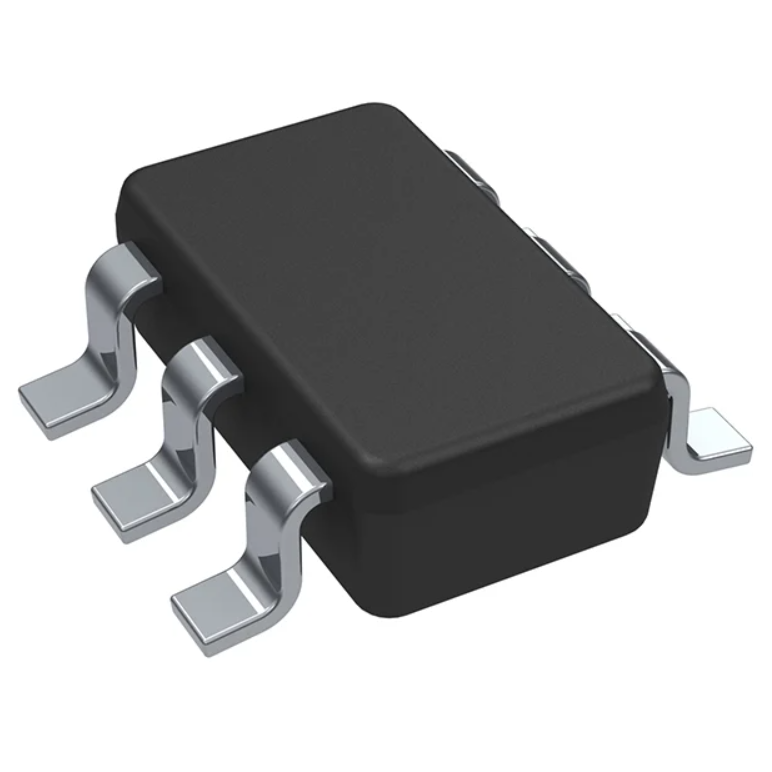
TTP223 Touch Switch Pinout and Circuit Diagram
TTP223 Pin Configuration
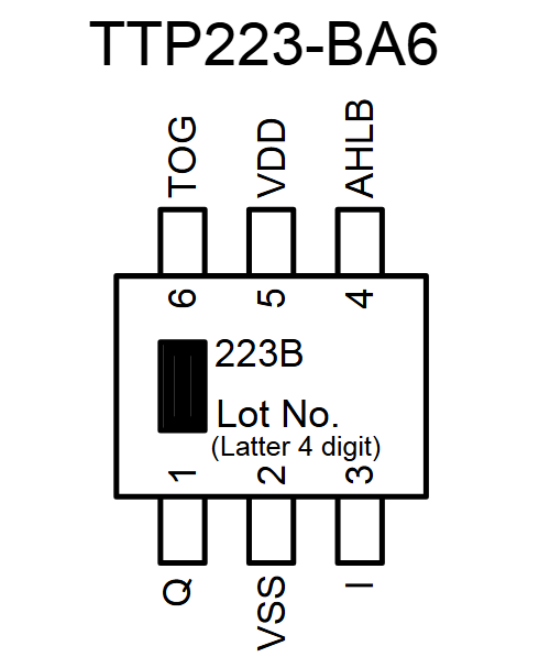
Pin No. | Pin Name | Description |
1 | Q | CMOS Output |
2 | VSS | Ground |
3 | I | Touch input (connected to touch pad electrode) |
4 | AHLB | Active High/Low selection |
5 | VDD | Power Supply (2.0V–5.5V) |
6 | TOG | Toggle mode selection |
TTP223 Basic Circuit Diagram
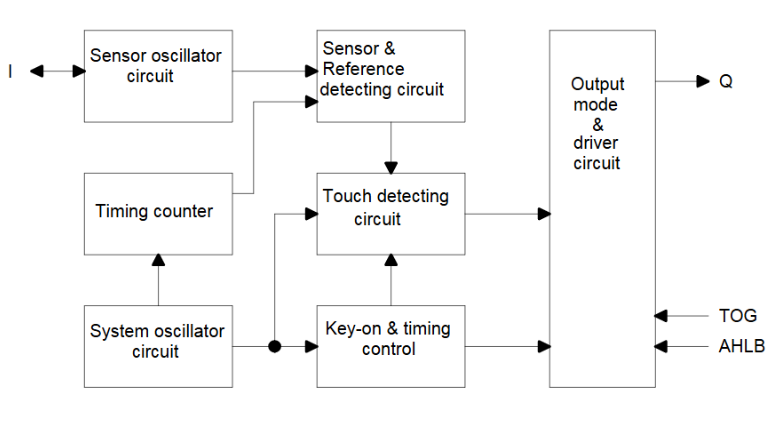
TTP223 Touch Sensor Features and Technical Details
Characteristic
Operating Current @ VDD = 3V (No Load): In low power mode, the typical current consumption is 1.5µA and the maximum is 3.0µA.
Response Time: The maximum response time is 220ms in low power mode at VDD = 3V.
Sensitivity Adjustment: Can adjust sensitivity by adding an external capacitor ranging from 0 to 50pF.
Stable Human Touch Detection: The device provides reliable human body detection and design to replace traditional mechanical push-button switches.
Operating Modes: The TTP223 supports low power mode, direct-mode, and toggle-mode. Can select the toggle function using the TOG pin.
Output Type: The Q pin provides a CMOS digital output signal.
Active Level Selection: The output can configure as active high or active low using the AHLB pin.
Power-On Stable Time: After power-on, the device requires approximately 0.5 seconds of stabilization time. During this period, the keypad should not touch and the touch function is disabled.
Auto Calibration: The TTP223 performs automatic calibration throughout its lifetime. In low power mode, the recalibration period is approximately 4 seconds. After a touch is detected and then released, auto recalibration occurs about 16 seconds after release.
Version Comparison: The TTP223N-BA6 offers higher sensitivity than the TTP223-BA6, but its stability is slightly lower compared to the standard TTP223-BA6.
TTP223 Technical Details
Parameter | Specification |
Operating Voltage Range | 2.0V – 5.5V |
Operating Current (VDD = 3V, No Load) | 1.5µA typical (low power mode), 3.0µA maximum |
Response Time | Maximum 220ms (low power mode @ 3V) |
Output Type | CMOS digital output |
Output Modes | Direct mode (momentary), Toggle mode (self-locking) |
Output Active Level | Selectable active high or active low (AHLB pin) |
Sensitivity Adjustment | External capacitor 0pF – 50pF |
Power-On Stabilization Time | Approximately 0.5 seconds |
Auto Recalibration Period | ~4 seconds (low power mode), ~16 seconds after touch release |
Channel Count | 1 capacitive touch input |
Package Type | SOT-23-6 (TTP223-BA6 / TTP223N-BA6) |
TTP223 Alternative
CAP1203
CAP1203 is a 3-channel capacitive touch sensor controller with an I²C interface. It is suitable for applications requiring multiple touch inputs and communication with a microcontroller through a digital bus.
TTP226
TTP226 is an 8-channel capacitive touch keypad IC. It supports both direct (momentary) mode and toggle (self-locking) mode, making it suitable for multi-key touch panels and control boards.
TTP229
TTP229 is a capacitive touch keypad controller available in 8-key or 16-key versions. It provides a serial output interface and widely use in touch keypads where require multiple buttons.
Overview of the TTP223 Touch Controller
Sensitivity Adjustment
Sensitivity depends on electrode size, panel thickness, and external capacitor (Cs, 0–50pF). Larger electrodes or thinner panels increase sensitivity, while adding Cs reduces it. Adjustments should match the PCB layout for reliable operation.
Output Mode
The TTP 223 supports direct and toggle modes, configurable via TOG and AHLB pins:
TOG | AHLB | Function |
0 | 0 | Direct mode, active high |
0 | 1 | Direct mode, active low |
1 | 0 | Toggle mode, power-on 0 |
1 | 1 | Toggle mode, power-on 1 |
Q pin provides CMOS output based on the selected mode.
Interfacing and Configuring the TTP223 Capacitive Touch Sensor
Can easily connect the TTP 223 chip to microcontrollers, LEDs, relays, and other digital devices. Its Q pin provides a CMOS output that can read directly by a microcontroller or use to drive external circuits.
Basic Connection:
VDD → 2–5.5V power supply
VSS → Ground
I → Touch pad electrode
Q → MCU digital input, LED, or relay driver
TOG → Select direct or toggle mode
AHLB → Select active high or active low output
Optional Cs (0–50pF) → Adjust sensitivity
Tips for Reliable Operation:
Keep electrode traces short and away from high-noise signals.
Avoid touching the pad during power-on stabilization (~0.5 seconds).
Use proper grounding for stable touch detection.
Can configure the IC for momentary (direct) or self-locking (toggle) operation, making it suitable for switches, keypads, and touch-based controls in consumer electronics.
TTP223 Applications
Consumer Electronics: Used in devices like remote controls, MP3 players, digital cameras, and home appliances where touch-based input replaces mechanical buttons, providing a sleek, modern interface.
Waterproof Products: It enables reliable touch input on waterproof panels and electronic devices where traditional mechanical buttons are unsuitable, making it ideal for outdoor and moisture-prone environments.
Button Key Replacement: The touch switch serves as a stable replacement for mechanical push-button switches in control panels, smart switches, LED lighting, kitchen appliances, and other touch-controlled devices, reducing wear and maintenance.
Wearable Devices and Touch Lamps: TTP 223 provides low-power, stable, and responsive touch detection for wearable devices, touch lamps, smart wristbands, and other compact electronics, enhancing user experience and extending battery life.
Industrial and Automotive Applications: Also suitable for industrial control panels and automotive dashboards where mechanical switches may wear out, offering reliable capacitive touch input for buttons, switches, and control interfaces.
Smart Home Devices: Integrate circuit into smart home systems, including touch-based light switches, fan controllers, and automated devices, providing seamless, modern touch operation with minimal power consumption.
1 Channel Capacitive Touch TTP223 Module
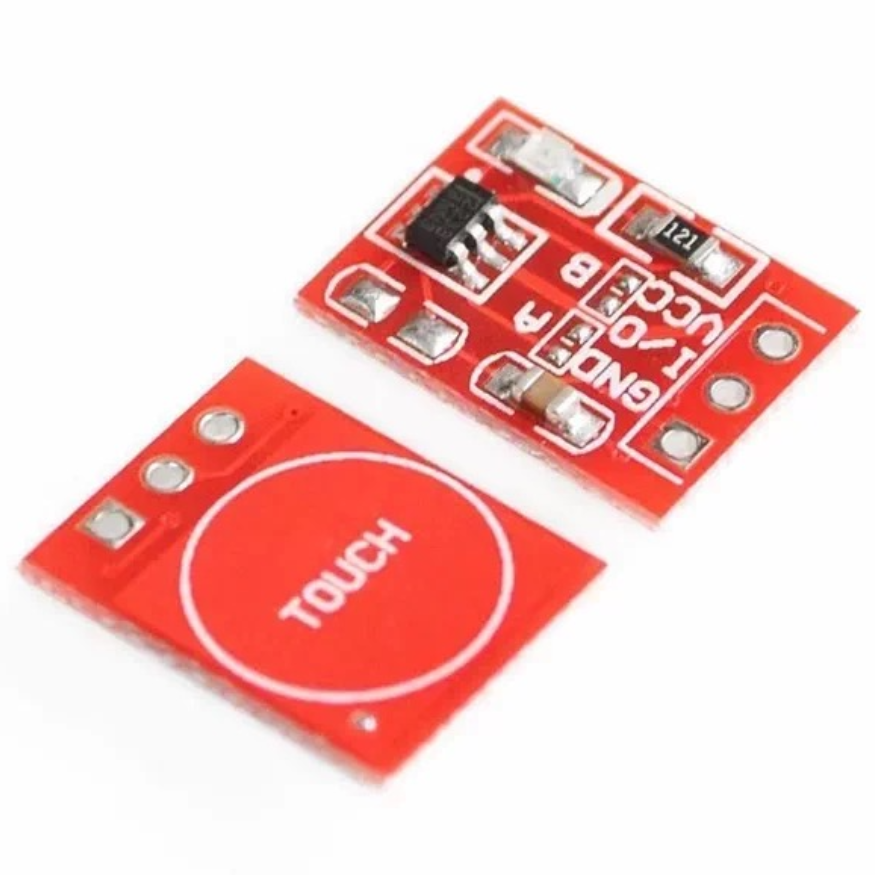
The 1-channel capacitive touch module uses the TTP223 chip and features a 7-second automatic reset function along with a built-in LDO voltage regulator, ensuring stable operation over long periods without system crashes.
7-Second Automatic Reset Function:
Also called the self-recovery function, this feature is crucial for products like wristbands, MP3 players, or other devices that connect to power before assembly. Without this function, fastening the panel may simulate a constant touch, keeping the output signal high and effectively “locking” the touch. With the reset function, after the set time, the touch signal returns to its initial state, allowing normal operation.
Built-in LDO Voltage Regulator:
The internal LDO regulator ensures stable power without needing an external LDO chip, saving PCB space and reducing costs. Modules without an internal regulator may experience power fluctuations from an unclean supply, leading to false triggering, device freeze, or malfunction.
This module supports self-locking (toggle) or point (momentary) operation, making it ideal for single-channel capacitive touch switches in consumer electronics, smart devices, and control panels.
TTP223 Datasheet PDF
For complete electrical characteristics, timing diagrams, and application examples, refer to this data sheet.
Frequently Asked Questions
How does TTP223 work?
The TTP 223 works by measuring changes in capacitance on its input pad. When a human finger approaches or touches the electrode, body capacitance increases. The internal detection circuit senses this change and outputs a digital signal at the Q pin.
What is TTP223 price?
The price depends on package type and quantity. In bulk orders, the IC typically costs only a few cents per piece. Ready-made modules are slightly higher because PCB and components.
What’s the difference between TTP223 and TTP223B?
The “B” version usually refers to different packaging or slightly revised internal characteristics. Functionally, both operate as single-channel capacitive touch sensors, but always verify the datasheet for exact electrical specifications and configuration differences.
What is TTP223 used for?
TTP 223 is used to replace mechanical push buttons in consumer electronics, smart home devices, waterproof control panels, wearable products, LED lighting control, and various touch-based switching applications.
Conclusion
The TTP223 Touch Switch is a versatile, low-power, and reliable solution for replacing traditional mechanical buttons in modern electronic designs. With its single-channel capacitive touch input, adjustable sensitivity, flexible output modes, and built-in features like auto-calibration and low-power operation, it provides stable and responsive touch detection.
Modules based on TTP 223, especially those with a 7-second automatic reset and built-in LDO voltage regulator, offer enhanced reliability and simplified integration, making them ideal for consumer electronics, waterproof devices, wearable products, smart home applications, and industrial control panels.
Overall, the touch switch enables designers to create compact, durable, and user-friendly touch interfaces, improving device aesthetics and functionality while reducing maintenance and mechanical wear.
Read More:
1. TP4056 Charging Module Pinout, Working, and Applications
2. BAV70 Diode – The Guide, Pinout, Features and Replacements
HOT NEWS
TP4056 Charging Module Pinout, Working, and Applications
TP4056 Charging Module Pinout, Working, and Applications
2026-01-23
LR41 Battery Guide: Specifications, Equivalents, and Uses
LR41 Battery Specifications, Equivalents, and Uses
2025-12-14
Understanding The CD4051 Analog Multiplexer
CD4051 analog multiplexer
2025-06-30
Understanding A 0603 Resistor
0603 resistor,dimensions,marking code, values
2025-05-29
MT3608 Boost Converter - An In-Depth Guide
MT3608 Boost Converter
2025-09-04
Complete Guide to the 220 Ohm Resistor
220 Ohm Resistor
2025-07-28
The 0402 Resistor: A Comprehensive Guide
0402 Resistor
2025-05-06
Mini MP1584 DC-DC 3A Buck Converter Module: Complete Guide
Mini MP1584 DC-DC 3A Buck Converter Module: Complete Guide
2026-03-26
Guide To The XL6009 Boost Converter
XL6009 Boost Converter
2025-09-05
What Is A 1206 Resistor?
1206 resistor dimensions,footprint,value
2025-06-05