




 BOM
BOM Cart
Cart Product Catalog
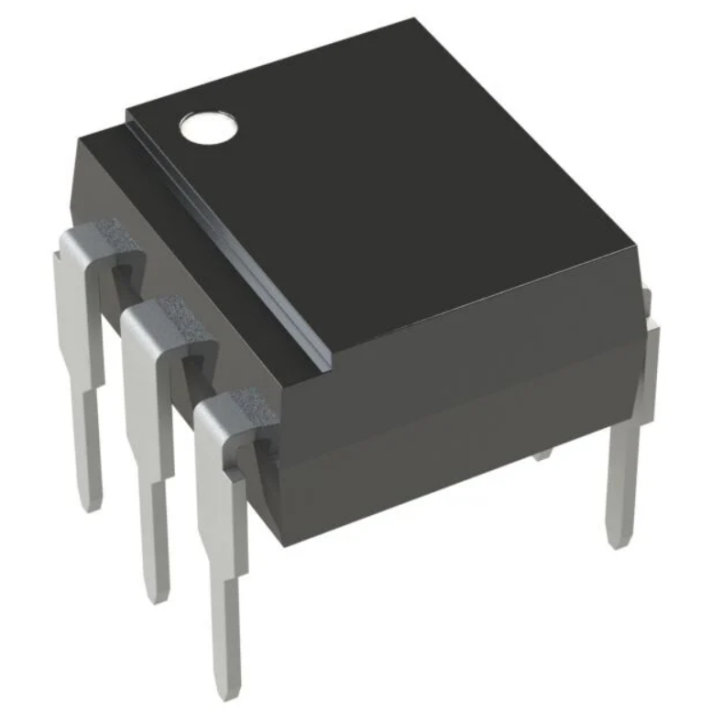
The 4N25 optocoupler is a widely used optoelectronic isolation device designed to transfer electrical signals between two circuits while maintaining complete electrical isolation. It combines a gallium arsenide infrared LED and a silicon NPN phototransistor in a compact 6-pin package, allowing to transmit signals through light rather than direct electrical connections.
Commonly use the opto coupler in industrial automation, power supplies, microcontroller interfaces, programmable logic controllers (PLCs), and digital communication systems. By isolating the input and output circuits, it helps protect sensitive electronic components from voltage spikes, electrical noise, ground loops, and high-voltage transients.
Thanks to its reliable performance, fast switching characteristics, and isolation voltage of up to 2500Vrms, the component remains a popular choice for engineers and designers who need safe and dependable signal isolation in electronic circuits. In this article, we will explore the 4N25 pinout, specifications, features, applications, equivalents, and how it compares with the popular 4N35 optocoupler.
What is 4N25 Optocoupler?
A general-purpose optocoupler (also called an optoisolator) designed to transfer electrical signals between two isolated circuits using light. It consists of a gallium arsenide infrared LED optically coupled to a silicon NPN phototransistor inside a standard 6-pin package.
When current flows through the input LED, it emits infrared light that activates the phototransistor on the output side. Since transfer the signal optically rather than electrically, the input and output circuits remain electrically isolated.
This isolation helps protect sensitive electronics from voltage spikes, electrical noise, ground loops, and high-voltage transients. As a result, the circuit widely use in power supplies, industrial control systems, PLCs, microcontroller interfaces, and digital communication circuits.
4N25 Pinout
Pin Configuration
The optocoupler features six pins, including the input infrared LED terminals and the output phototransistor terminals. Understanding the function of each pin is important when designing isolated signal transmission circuits.
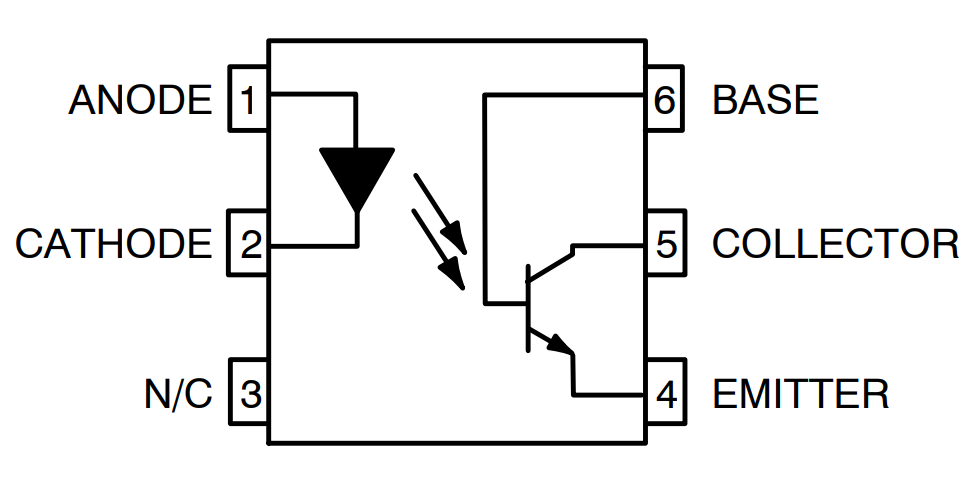
Pin | Function | Description |
Anode (1) | Anode terminal of LED | Connects to the positive side of the input LED. |
Cathode (2) | Cathode terminal of LED | Connects to the negative side of the input LED. |
NC (3) | No Connection | Internally not connected and typically left unused. |
Emitter (4) | Emitter pin of phototransistor | Output transistor emitter terminal. |
Collector (5) | Collector pin of phototransistor | Output transistor collector terminal used for switching. |
Base (6) | Base pin of phototransistor | Allows external control or biasing of the phototransistor. |
The input side (Pins 1 and 2) and output side (Pins 4, 5, and 6) are electrically isolated from each other. Signal transfer occurs through infrared light inside the package, providing excellent protection against voltage spikes, electrical noise, and ground loop problems.
4N25 CAD Models
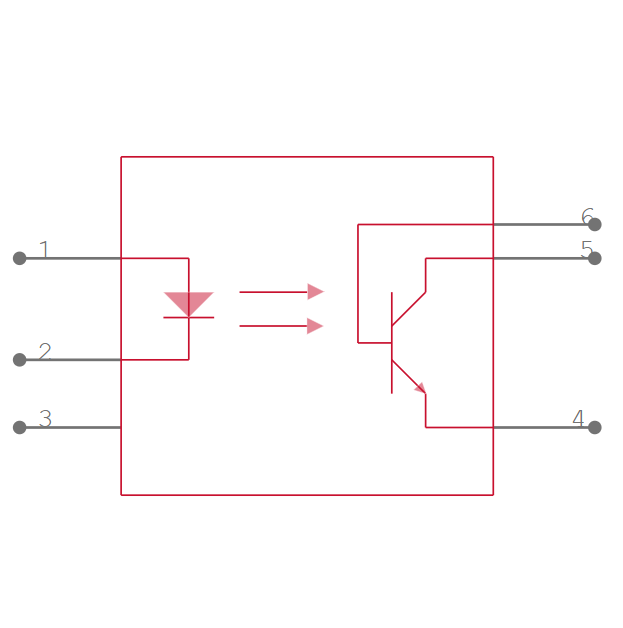
Symbol
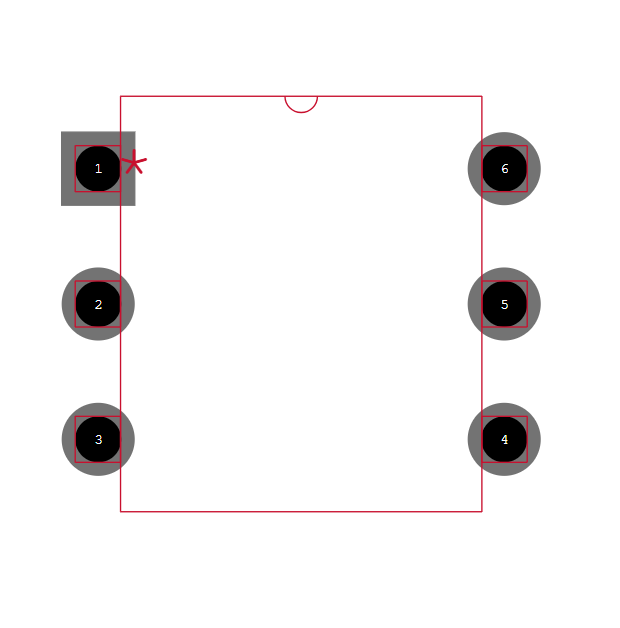
Footprint
3D Model
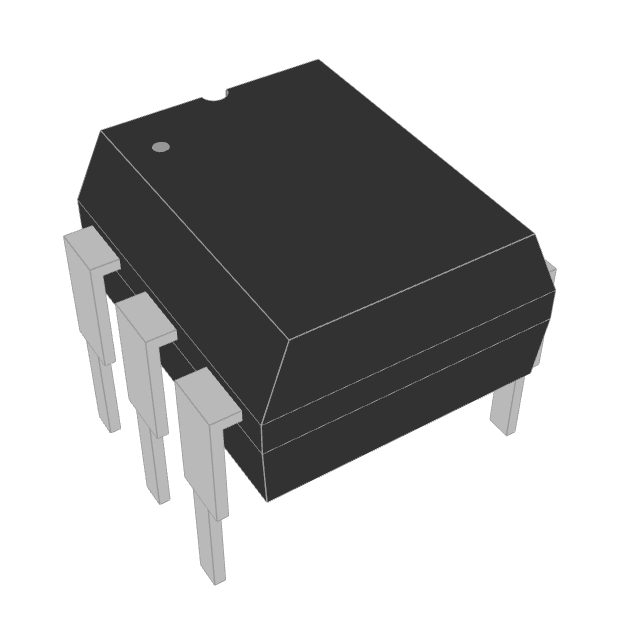
4N25 Specifications
Table
Parameter | Value |
Manufacturer | Lite-On Inc. |
Number of Channels | 1 |
Input Type | DC |
Output Type | Transistor with Base |
Current Transfer Ratio (Min) | 20% @ IF = 10mA |
Output Current | 100mA |
Forward Voltage (Typ) | 1.2V |
Forward Current (Max) | 80mA |
Collector-Emitter Saturation Voltage | 500mV |
Isolation Voltage | 2500Vrms |
Output Voltage (Max) | 30V |
Rise Time (Typ) | 3µs |
Fall Time (Typ) | 3µs |
Operating Temperature | -55°C to +100°C |
Mounting Type | Through Hole/Surface Mount |
Package | 6-DIP/6-SMD |
4N25 Manufacturer
The 4N25 optocoupler manufacture by several well-known optoelectronic component suppliers, including Everlight Electronics and Lite-On Inc. These manufacturers provide the device in various package options such as DIP and surface-mount versions, ensuring compatibility with industrial, commercial, and general-purpose isolation applications.
Package Options
· 6-DIP (Dual Inline Package)
· 6-SMD (Surface Mount Package)
4N25 Opto Isolator Features
High Current Transfer Ratio (CTR)
The chip offers a minimum current transfer ratio (CTR) of 10% at IF = 10mA and VCE = 10V. This enables reliable signal transmission between electrically isolated input and output circuits.
Fast Response Time
With a typical turn-on time of 3µs, the IC is suitable for switching applications, digital interfaces, and industrial control systems that require quick signal response.
High Isolation Voltage
The device provides an input-to-output isolation voltage of up to 2,500Vrms, helping protect sensitive electronic circuits from high-voltage transients, electrical noise, and ground loops.
Multiple Package Options
The compionent is available in standard dual-in-line package, wide lead spacing package (4N25M), surface-mount package (4N25S), and tape-and-reel packaging (4N25S-TA1) for automated assembly.
Safety Certifications
The optocoupler carries UL, TUV, DEMKO, CSA, cUL, VDE, FIMKO, and CQC approvals, ensuring compliance with international safety standards.
RoHS Compliance
All materials used in the 4N25 comply with EU RoHS environmental regulations.
ESD Protection
The device withstands ESD levels up to HBM 8000V and MM 2000V, improving reliability during handling and operation.
MSL Rating
The circuit features MSL Class 1, indicating excellent moisture resistance and long shelf life.
4N25 Applications
Programmable Logic Controllers (PLCs)
Provide electrical isolation between field wiring and sensitive PLC circuitry, improving reliability and protecting against industrial noise.
Power Supply Regulators
Used in feedback circuits of regulated power supplies and switch-mode power supplies (SMPS) to safely transfer control signals across isolation barriers.
Digital Logic Inputs
Interfaces low-voltage logic systems with higher-voltage control circuits while maintaining electrical isolation.
Microprocessor Inputs
Protects microcontrollers and processors from voltage surges and noise generated by external devices.
Hybrid Substrates
Suitable for high-density mounting applications where require compact and isolated signal transmission.
Industrial Automation
Widely used in motor drives, relay interfaces, sensor isolation, and industrial communication systems.
4N25 Equivalents
Can use several optocouplers as alternatives to the 4N25, depending on the required isolation voltage, current transfer ratio (CTR), switching characteristics, and package type.
4N26
The 4N26 is a close substitute and features an input-to-output isolation voltage of 1,500Vrms. Commonly use in general-purpose signal isolation and switching applications.
4N27
The 4N27 is another member of the 4N2X family, offering 1,500Vrms isolation voltage. It provides similar functionality and is suitable for industrial control and interface circuits.
4N28
The 4N28 operates similarly but has a lower isolation voltage rating of 500Vrms. Often use in low-voltage isolation applications where not require high isolation.
4N33
The 4N33 features a Darlington phototransistor output with base connection, providing higher current gain than the 4N25. It offers an isolation voltage of 5,000Vrms and comes in a standard 6-DIP package.
MCT2E
The MCT2E is a popular replacement, featuring a phototransistor with base output, 5,000Vrms isolation voltage, and a 6-DIP package. Widely use in industrial and power supply applications.
PC817
The PC817 is one of the most commonly used optoisolators in consumer and industrial electronics. It provides 5kV isolation, a single-channel phototransistor output, low cost, and wide availability, making it a practical alternative to the 4N25 in many designs.
Where and How to Use 4N25?
The 4N25 optocoupler is used whenever require electrical isolation between two circuits while still allowing signals to transfer. Commonly find in switch-mode power supplies (SMPS), programmable logic controllers (PLCs), microcontroller systems, industrial automation equipment, motor control circuits, and digital communication interfaces. By using optical coupling instead of a direct electrical connection, the component helps protect sensitive electronics from voltage spikes, electrical noise, and ground loop issues.
How It Works: The input side of the 4N25 contains an infrared LED connected to pins 1 and 2. When use a current-limiting resistor and current flows through the LED, it emits infrared light. This light activates the internal phototransistor connected to pins 4, 5, and 6 on the output side. The phototransistor then switches on, allowing the output circuit to respond to the input signal while remaining electrically isolated.
Typical Applications: The opto Isolator frequently use for microcontroller-to-high-voltage interfacing, relay driving circuits, SMPS feedback isolation, PLC input modules, digital signal isolation, and industrial control systems where require safe and reliable signal transmission. Its 2,500Vrms isolation rating makes it suitable for many low- to medium-power isolation applications.
4N25 vs 4N35
Table
Parameter | 4N25 | 4N35 |
Manufacturer | Lite-On Inc. | Lite-On Inc. |
Series | 4N2X | 4N3X |
Output Current | 100mA | 100mA |
Forward Voltage | 1.2V | 1.2V |
Forward Current Max | 80mA | 60mA |
CTR (Min @ 10mA) | 20% | 100% |
Isolation Voltage | 2500Vrms | 3550Vrms |
VCE Saturation | 500mV | 300mV |
Rise Time | 3µs | 3µs |
Fall Time | 3µs | 3µs |
Operating Temperature | -55°C~+100°C | -55°C~+100°C |
Output Voltage Max | 30V | 30V |
Key Differences
The 4N25 and 4N35 are both 6-pin phototransistor optocouplers, but they differ mainly in performance and sensitivity.
The 4N25 has a lower current transfer ratio (CTR, typically around 20% minimum), meaning it needs more LED input current to produce a usable output signal. It also offers an isolation voltage of about 2500Vrms and is suitable for general-purpose isolation tasks where performance requirements are moderate.
The 4N35, on the other hand, is more sensitive, with a much higher CTR (around 100% minimum at 10mA). This allows it to operate with lower input current. It also provides a higher isolation rating of about 3550Vrms and a lower VCE saturation voltage, making it more efficient for switching applications.
In short, 4N25 is for basic isolation, while prefer 4N35 when need higher gain and better switching performance.
4N25 Datasheet PDF
The data sheet contains detailed information.
Frequently Asked Questions[FAQ]
What is 4N25?
A phototransistor-output optocoupler that uses an infrared LED and a silicon phototransistor to transfer signals while maintaining electrical isolation between input and output circuits.
What is similar to 4N25?
Common alternatives include 4N26, 4N27, 4N28, 4N33, MCT2E, PC817, and 4N35. The best replacement depends on required CTR, switching speed, and isolation voltage.
What is the main purpose of an optocoupler?
An optocoupler transfers signals between isolated circuits using light, protecting sensitive electronics from voltage spikes, electrical noise, and ground-loop problems.
How to test 4N25 optocoupler?
Apply current through the input LED using a resistor and measure the collector-emitter response on the output transistor. The output should switch when the LED is illuminated.
Why do you need an optocoupler?
Optocouplers provide galvanic isolation, improving safety and protecting low-voltage circuits from high-voltage transients and electrical interference.
Why is optocoupler used in SMPS?
In SMPS designs, optocouplers safely transfer feedback signals from the secondary side to the primary controller while maintaining isolation between mains voltage and low-voltage outputs.
Why optoisolator is used in PLC?
PLCs operate in electrically noisy industrial environments. Optoisolators protect control electronics from voltage surges, noise, and ground-potential differences.
Why is an optocoupler advantageous?
Optocouplers improve system reliability, increase safety, eliminate ground loops, reduce noise susceptibility, and provide effective electrical isolation without direct conductive connections.
Conclusion
The 4N25 optocoupler remains one of the most widely used optoisolators for industrial, power supply, and microcontroller applications. Its simple design combines an infrared LED and phototransistor in a compact 6-pin package, providing reliable signal transmission with up to 2500Vrms isolation. With multiple package options, industry approvals, and compatibility with numerous alternative devices, the 4N25 continues to be a practical solution for achieving safe and noise-resistant circuit isolation.
Read More:
1. 4N35 Optocoupler – Complete Guide, Pinout and Datasheet
HOT NEWS
TP4056 Charging Module Pinout, Working, and Applications
TP4056 Charging Module Pinout, Working, and Applications
2026-01-23
LR41 Battery Guide: Specifications, Equivalents, and Uses
LR41 Battery Specifications, Equivalents, and Uses
2025-12-14
Understanding A 0603 Resistor
0603 resistor,dimensions,marking code, values
2025-05-29
Understanding The CD4051 Analog Multiplexer
CD4051 analog multiplexer
2025-06-30
MT3608 Boost Converter - An In-Depth Guide
MT3608 Boost Converter
2025-09-04
Complete Guide to the 220 Ohm Resistor
220 Ohm Resistor
2025-07-28
The 0402 Resistor: A Comprehensive Guide
0402 Resistor
2025-05-06
Guide To The XL6009 Boost Converter
XL6009 Boost Converter
2025-09-05
Mini MP1584 DC-DC 3A Buck Converter Module: Complete Guide
Mini MP1584 DC-DC 3A Buck Converter Module: Complete Guide
2026-03-26
What Is A 1206 Resistor?
1206 resistor dimensions,footprint,value
2025-06-05