




 BOM
BOM Cart
Cart Product Catalog
The LM339 is a widely used quad voltage comparator IC designed for reliable operation across consumer, automotive, and industrial electronics. With four independent comparators in a single package, low input bias current, and flexible supply voltage support, the LM339 remains a popular choice for level detection, sensing, and control applications.
4. LM339 Comparator Specifications
6. LM339 Equivalent and Alternative
7. How to Use Comparator IC LM339?
10. LM339 IC Chip Long-Term Operation Tips
11. Parts with Similar Specifications to LM339
12. Frequently Asked Questions [FAQ]
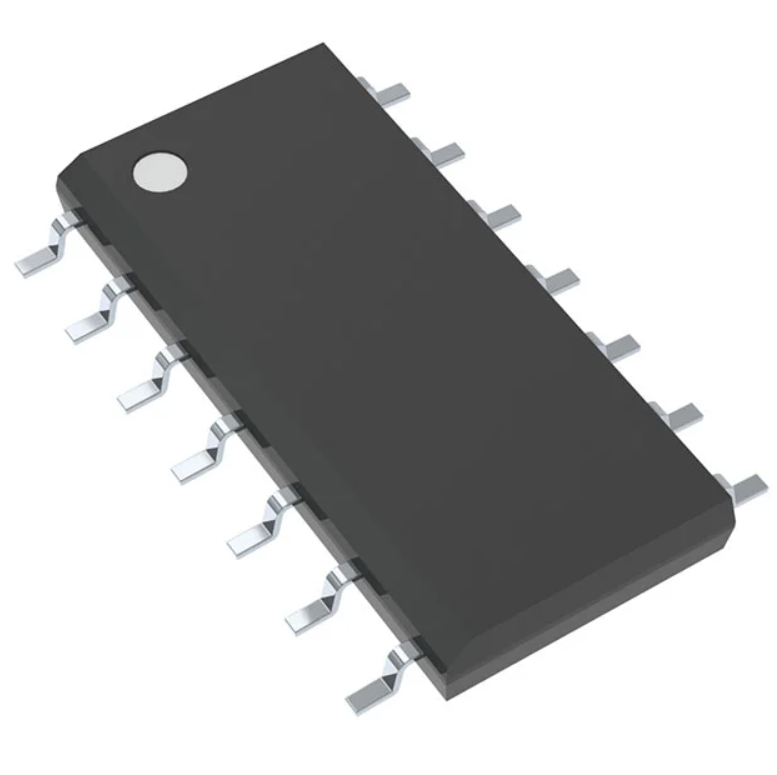
What Is LM339?
A quad voltage comparator IC that integrates four independent comparators in a single package. It compares analog input voltages and provides digital-style open-collector outputs, making it suitable for interfacing with TTL and CMOS logic. The circuit operates over a wide supply range, supporting both single-supply and dual-supply configurations. These comparators design for use in level detection, low-level sensing, and memory applications in consumer, automotive, and industrial electronic systems. With low input bias current, wide bandwidth, and reliable performance, the chip commonly use in control circuits, protection systems, and signal monitoring applications.
LM339 Pinout and CAD Model
The LM 339 is a quad comparator IC available in a 14-pin package. Each comparator has one non-inverting input, one inverting input, and an open-collector output.
LM339 Pin Configuration
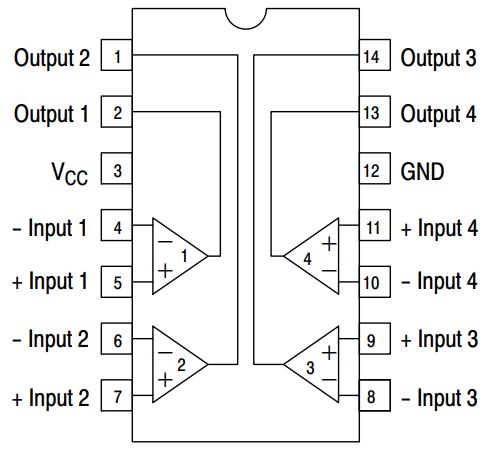
Pin | Name | Description |
1 | 2OUT | Output of Comparator-2 |
2 | 1OUT | Output of Comparator-1 |
3 | VCC | Positive supply voltage |
4 | 1IN− | Inverting input of Comparator 1 |
5 | 1IN+ | Non-inverting input of Comparator-1 |
6 | 2IN− | Inverting input of Comparator-2 |
7 | 2IN+ | Non-inverting input of Comparator-2 |
8 | 3IN− | Inverting input of Comparator-3 |
9 | 3IN+ | Non-inverting input of Comparator 3 |
10 | 4IN− | Inverting input of Comparator 4 |
11 | 4IN+ | Non-inverting input of Comparator-4 |
12 | GND | Ground |
13 | 4OUT | Output of Comparator-4 |
14 | 3OUT | Output of Comparator-3 |
This pin arrangement allows the chip to perform four independent voltage comparisons using a single IC.
The LM 339 pinout differ slightly depending on the manufacturer, mainly in pin numbering orientation and package style, not in function.
Always verify the pinout using the specific manufacturer’s datasheet before PCB layout or soldering, especially when switching between TI, ST, and onsemi brands.
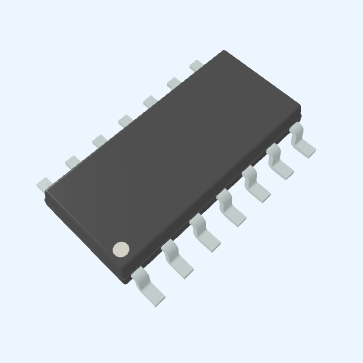
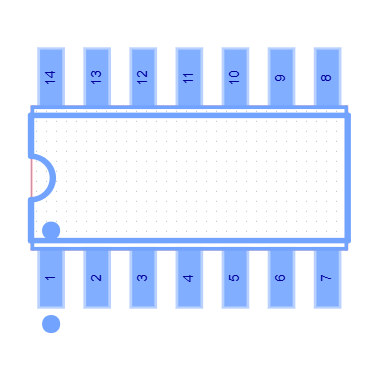
LM339 CAD Model
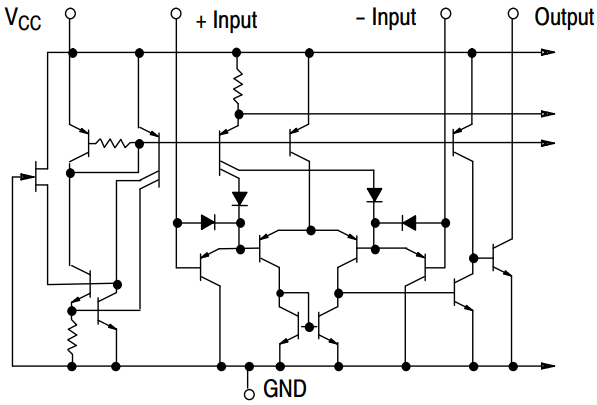
LM339 IC Circuit Schematic Diagram
LM339 Features
Single Supply Operation: Operate with a single supply voltage from 3.0 V to 36 V, making it flexible for various applications.
Split Supply Operation: It also supports dual-supply operation (±1.5 V to ±18 V) for circuits requiring positive and negative rails.
Low Input Bias Current: Typical input bias current is 25 nA, ensuring minimal current draw from sensors or signal sources.
Low Input Offset Current: The input offset current is ±5 nA, providing accurate voltage comparison.
Low Input Offset Voltage: Ensures precise switching and stable operation.
Input Common-Mode Voltage Range: Works down to ground level, allowing versatile input connections.
Low Output Saturation Voltage: Only 130 mV at 4 mA, reducing voltage drop.
TTL and CMOS Compatible: Easy integration with logic circuits.
ESD Protection: Internal clamps improve reliability without affecting performance.
Automotive NCV Versions: AEC-Q100 qualified, Pb-Free, Halogen/BFR free, and RoHS compliant, suitable for industrial and automotive applications.
LM339 Comparator Specifications
Parameter | Value |
Output Type | CMOS, Open-Collector, TTL |
Number of Comparators | 4 |
Supply Voltage (Single) | 3.0 V to 36 V |
Supply Voltage (Dual) | ±1.5 V to ±18 V |
Input Bias Current | 25 nA (typ) |
Input Offset Current | ±5 nA (typ) |
Input Offset Voltage | 2 mV (typ), 5 mV (max) |
Input Common-Mode Voltage Range | 0 V to VCC − 1.5 V |
Differential Input Voltage | Can exceed supply without damage |
Output Type | Open-collector |
Output Saturation Voltage | 130 mV @ 4 mA (typ) |
Output Sink Current | 16 mA max |
Response Time / Propagation Delay | 1.3 µs (typ) |
Input Resistance | 2 MΩ (typ) |
Supply Current | 0.8 mA per comparator (typ) |
Operating Temperature | 0°C ~ 70°C |
Storage Temperature | −65°C to +150°C |
Logic Compatibility | TTL / CMOS |
ESD Protection | Yes, on inputs |
Package Types | DIP-14, SOIC-14, TSSOP-14 |
Mounting Type | Surface Mount, Through-Hole |
RoHS / Environmental | Pb-Free, Halogen-Free, BFR-Free |
LM339 Package Details

14-DIP: Available in a 14-DIP package, which is a standard through-hole option. It measures 0.300" (7.62 mm) in width, making it ideal for prototyping and traditional PCB designs where require manual soldering or testing.
LM339 SMD
14-SOIC: For surface-mount applications, the chip comes in a SOIC 14 pin. This package is 0.154" (3.90 mm) wide, offering a compact footprint suitable for automated assembly and medium-density PCB layouts.
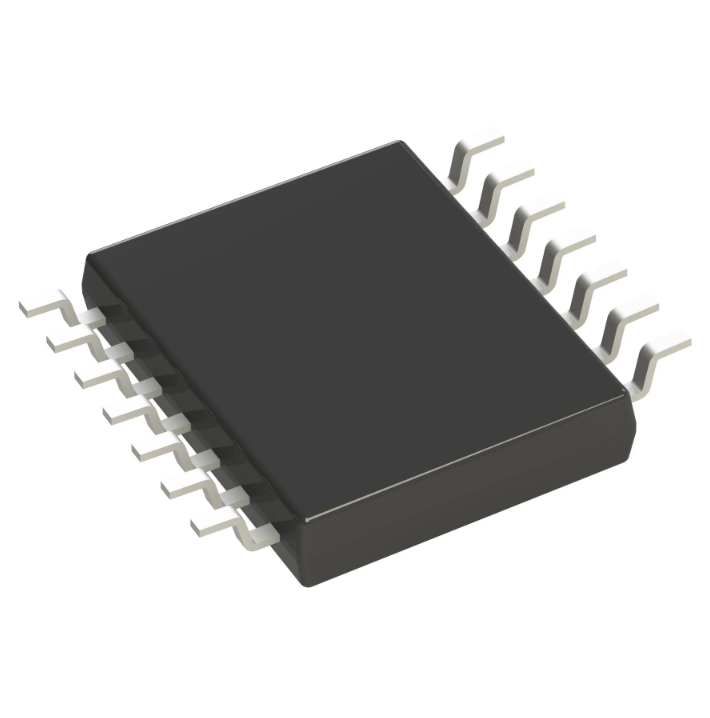
14-TSSOP: Another surface-mount option is the TSSOP-14 package. 0.173" (4.40 mm) wide and thinner than SOIC, making it especially suitable for space-constrained and high-density PCB designs.
These package options provide flexibility for designers, allowing the chip to use across prototyping, consumer, automotive, and industrial applications, accommodating different assembly methods and PCB layouts.
LM339 Manufacturer Information
Onsemi
The LM 339 is available from onsemi, offering standard and automotive-grade versions suitable for industrial and consumer applications.
LM339 ST
STMicroelectronics provides the chip with reliable performance, including options for surface-mount and through-hole packages, supporting a wide range of temperature and voltage requirements.
LM339 TI
Texas Instruments manufactures the IC with high consistency and quality, providing datasheets, reference designs, and long-term availability for both prototype and production use.
These manufacturers ensure that the Comparator is widely available and compliant with industry standards, including RoHS, and in some cases, automotive-specific AEC-Q100 certification.
LM339 Datasheet PDF
Data sheets are available directly from our websites, providing electrical characteristics, application circuits, and layout guidelines.
LM339 Applications
Vacuum Robot: Used to monitor sensors for obstacle detection and motor control.
Single Phase UPS & Server PSU: They detect voltage thresholds to ensure stable power supply operation.
Cordless Power Tool: They monitor battery voltage and load conditions, providing accurate overcurrent or undervoltage detection.
Wireless Infrastructure & Appliances: Used for signal monitoring and level detection in communication and consumer devices.
Building & Factory Automation, Motor Drives: Provide reliable voltage comparison for control circuits, automation, and protection.
Infotainment & Cluster: Supports sensor level detection, system monitoring, and display logic in automotive applications.
These applications benefit from the high gain, wide bandwidth, and open-collector outputs of the chip.
LM339 Equivalent and Alternative
LM339 Replacement
IC | Key Specs |
LM2901 | Quad comparator, 3V–36V supply, open-collector outputs, DIP/SOIC packages |
LM3302 | Quad high-performance comparator, 3V–36V, low offset, open-collector outputs |
LM139 | Quad comparator, 2V–36V, industrial/military grade, open-collector outputs |
LM239 | Quad comparator, 2 V–36V, industrial-grade, open-collector, DIP package |
LM397 | Quad high-precision comparator, 2V–36 V, open-collector outputs |
LM324 | Quad op-amp, 3V–32V, push-pull outputs, can use as comparator |
MC3302 | Dual comparator, 3V–32V, open-collector outputs, automotive-grade |
NCV2901 | Quad comparator, 3V–36 V, automotive-grade, AEC-Q100 qualified |
CA139 / CA139A | Quad comparator, 3 V–36V, high-precision, open-collector outputs |
CA339 | Quad comparator, 3V–36V, low offset, industrial/high-precision applications |
These alternatives can serve as LM 339 replacements depending on availability, package type, or specific application requirements. Always check pin compatibility, voltage range, and output type before substituting to ensure proper circuit operation.
How to Use Comparator IC LM339?
Step 1: Power the IC
Connect the VCC-pin to the positive supply voltage and GND pin to ground. It can operate with single supply (3–36 V) or dual supply (±1.5–18 V).
Step 2: Connect Inputs
Each comparator has a non-inverting input (IN+) and inverting input (IN−). Apply the signal voltage to IN+ and the reference voltage to IN− if to detect when the signal exceeds the reference.
Step 3: Add Pull-Up Resistor
The LM 339 output is open-collector, so connect a pull-up resistor (typically 4.7kΩ–10kΩ) from the output pin to VCC to generate a proper logic signal.
Step 4: Optional Hysteresis
Add a small positive feedback resistor (<10 mV) between output and non-inverting input to reduce oscillations near the threshold.
Step 5: Ground Unused Inputs
All unused comparator inputs should be tied to ground to avoid false triggering.
Step 6: Read Output
The output goes low when IN− > IN+, and high (via pull-up) when IN+ > IN−. Connect this output to logic circuits, microcontrollers, or other load devices.
LM339 vs LM339N Comparison
The LM339 and LM339N are essentially the same quad comparator IC of electrical characteristics, but they differ mainly in package type and designation.
LM339: This is the standard part number for the IC and is available in multiple packages such as DIP, SOIC, and TSSOP, including both through-hole and surface-mount designs. It supports single-supply operation (3–36 V), dual-supply operation (±1.5–18 V), and features open-collector outputs compatible with TTL and CMOS logic.
LM339N: The “N” suffix usually refers to the DIP-14 through-hole package version of the LM339. It widely use for breadboarding, prototyping, and applications where prefer through-hole mounting. Electrically, identical to the standard LM339, with the same input offset, bias currents, and output characteristics.
Key Takeaways:
Both ICs are quad comparators with identical functionality.
LM339N is specifically the DIP-14 package, whereas LM339 can refer to multiple package types including SMD.
Performance, voltage ranges, and applications remain the same for both.
This distinction is important for PCB design, as choosing the wrong package could affect.
LM393 vs LM339
Feature | LM393 | LM339 |
Number of Comparators | 2 | 4 |
Output Type | Open-collector | Open-collector |
Supply Voltage Range | Similar | Similar |
Applications | Smaller designs | Multi-channel systems |
Are both voltage comparator ICs, but they differ in number of comparators, package, and typical applications.
LM393
Dual comparator IC (contains 2 independent comparators per chip).
Supports single-supply (2–36 V) and dual-supply (±1–18 V) operation.
Open-collector outputs compatible with TTL and CMOS logic.
Typically used in small circuits where need only two comparisons, such as sensor threshold detection or window comparators.
Smaller footprint, often available in DIP-8, SOIC-8, or TSSOP-8 packages.
LM339
Quad comparator IC (contains 4 independent comparators per chip).
Supports single-supply (3–36 V) and dual-supply (±1.5–18 V) operation.
Open-collector outputs compatible with TTL and CMOS logic.
Ideal for applications requiring multiple voltage comparisons, such as motor control, battery monitoring, UPS systems, and industrial automation.
Available in DIP-14, SOIC-14, and TSSOP-14 packages.
Key Difference:
The main difference is the number of comparators: LM393 has 2, LM339 has 4. Choosing between them depends on the number of thresholds or signals you need to monitor in your design.
LM339 IC Chip Long-Term Operation Tips
To ensure reliable long-term operation of the comparator IC, follow these best practices:
1. Proper Power Supply:
Use a supply voltage within the recommended range: 3–36 V for single supply or ±1.5–18 V for dual supply. Avoid voltage spikes or surges that exceed these limits.
2. Protect Inputs:
Keep input voltages within the common-mode range. Should avoid voltages more negative than −300 mV. Consider adding series resistors or clamping diodes for extra protection against transients.
3. Pull-Up Resistors:
Since the LM339 outputs are open-collector, always use a pull-up resistor appropriate for your load. This ensures stable logic levels and reduces stress on the output transistor.
4. Minimize Oscillations:
High gain and wide bandwidth can cause oscillations if inputs are coupled to outputs. Keep input resistors low and close to the IC, avoid parallel routing of output and negative input traces, and consider positive feedback (<10 mV) for hysteresis.
5. Ground Unused Inputs:
All unused inputs should be tied to ground to prevent false triggering or floating voltages.
6. Temperature Considerations:
Ensure operation within the −40°C to +85°C range (or manufacturer-specified range for automotive versions) and provide adequate heat dissipation in high-current applications.
7. Environmental Compliance:
Use RoHS-compliant and Pb-free versions for long-term reliability and environmentally safe operation.
Following these recommendations helps maintain stable performance, prevent damage, and extend the lifespan of the IC in your circuits.
Parts with Similar Specifications to LM339
LM339N: This is the DIP-14 through-hole version of the LM339’s series. It provides the same quad comparator functionality with open-collector outputs, wide supply voltage range, and compatibility with TTL/CMOS logic. Ideal for prototyping and traditional PCB designs.
KA339: The KA339 is a quad comparator similar to the LM 339, offering comparable input offset voltage, supply voltage ranges, and pin configuration. Widely use in industrial and consumer electronics requiring multiple voltage comparisons in a single IC.
KA339A: Similar to the KA339, the KA339A provides quad comparator performance with low input offset and open-collector outputs. Suitable for circuits demanding stable and precise voltage comparison.
KA319: The KA319 is typically a dual comparator IC, sharing many of the electrical characteristics of the LM339. Suitable when need only two comparators, while still providing reliable voltage detection.
LM339SNG: The LM339SNG is a modern variant of the LM339, maintaining equivalent electrical performance while offering improved package options or environmental compliance. It can replace LM339 in most applications without design changes.
These ICs all share similar supply voltage ranges, input offset voltages, number of pins, and open-collector outputs, making them reliable alternatives for threshold detection, motor control, battery monitoring, UPS systems, and industrial automation.
Frequently Asked Questions [FAQ]
How does the LM339 comparator work?
The circuit compares two input voltages at its non-inverting (IN+) and inverting (IN−) terminals. When IN+ exceeds IN−, the output goes high (via pull-up resistor). When IN− exceeds IN+, the output goes low. Open-collector outputs allow interface with TTL/CMOS logic for threshold detection and control applications.
Can the LM393 be used in place of the LM358?
No. The LM393 is a dual-comparator, while the LM358 is a dual operational amplifier. Although both can process analog signals, LM393 outputs are open-collector and designed for voltage comparison, whereas LM358 provides linear amplification. Substitution requires circuit redesign to accommodate differences in function and output type.
What is LM339 price?
The price depends on manufacturer, package, and quantity. Typically, single units cost $0.20–$2 USD online, while bulk orders reduce the price significantly. Automotive-grade or NCV versions cost slightly more because certifications like AEC-Q100 and RoHS compliance.
What is the function of LM339?
The LM339 is a quad voltage comparator IC that compares two input voltages and provides digital-style outputs. Use for level detection, threshold sensing, battery monitoring, motor control, UPS systems, and other applications requiring accurate voltage comparison and logic-level outputs.
Is LM339 an open-collector?
Yes. All four outputs of the circuit are open-collector, meaning they can only sink current. Required a pull-up resistor to generate a proper logic-high voltage, allowing interface with TTL or CMOS logic and enabling multiple comparators to share a common output line.
What is the difference between LM324 and LM339?
LM324 is a quad operational amplifier with push-pull outputs for linear signal amplification. LM339 is a quad comparator with open-collector outputs designed for digital-level voltage comparison. LM339 is better for threshold detection, while LM324 is suitable for analog signal processing.
What is the replacement for LM339N?
Replacements include LM2901, LM3302, LM139, LM239, KA339, CA139, CA339, or automotive-grade NCV2901. These alternatives offer quad comparator functionality, similar supply ranges, open-collector outputs, and are compatible in circuits designed for LM339N DIP-14 through-hole packages.
Can LM339 be used with a single supply?
Yes. The LM 339 supports single-supply operation from 3V to 36V. The inputs must stay within the common-mode voltage range, and require a pull-up resistor on the open-collector outputs. This allows use in circuits without a negative rail.
What are the advantages of using an LM339?
Advantages include quad comparator integration, wide supply voltage range, low input bias/offset currents, open-collector outputs compatible with TTL/CMOS, flexibility for single or dual supply operation, and high reliability for consumer, automotive, and industrial applications. The chip is compact, versatile, and cost-effective.
Conclusion
The LM339 is a highly versatile quad comparator IC widely used in consumer, automotive, and industrial applications. Its open-collector outputs, wide supply voltage range, low input bias, and compatibility with TTL and CMOS logic make it ideal for level detection, threshold sensing, and control circuits. With multiple package options, including DIP, SOIC, and TSSOP, designers can choose the most suitable form factor for prototyping or mass production. Automotive-grade and RoHS-compliant versions further enhance reliability and environmental compliance. Whether for UPS systems, motor control, battery monitoring, or industrial automation, the LM 339 remains a reliable, cost-effective, and precise solution for voltage comparison needs.
Read More:
1. LM393: Guide to the Dual Comparator IC
2. LM317T Voltage Regulator: Pinout, Datasheet and Equivalent
HOT NEWS
TP4056 Charging Module Pinout, Working, and Applications
TP4056 Charging Module Pinout, Working, and Applications
2026-01-23
LR41 Battery Guide: Specifications, Equivalents, and Uses
LR41 Battery Specifications, Equivalents, and Uses
2025-12-14
Understanding A 0603 Resistor
0603 resistor,dimensions,marking code, values
2025-05-29
Understanding The CD4051 Analog Multiplexer
CD4051 analog multiplexer
2025-06-30
MT3608 Boost Converter - An In-Depth Guide
MT3608 Boost Converter
2025-09-04
Complete Guide to the 220 Ohm Resistor
220 Ohm Resistor
2025-07-28
The 0402 Resistor: A Comprehensive Guide
0402 Resistor
2025-05-06
Guide To The XL6009 Boost Converter
XL6009 Boost Converter
2025-09-05
Mini MP1584 DC-DC 3A Buck Converter Module: Complete Guide
Mini MP1584 DC-DC 3A Buck Converter Module: Complete Guide
2026-03-26
What Is A 1206 Resistor?
1206 resistor dimensions,footprint,value
2025-06-05