




 BOM
BOM Cart
Cart Product Catalog
The PN532 NFC RFID Module is one of the most popular NFC development boards for Arduino, Raspberry Pi, ESP32, STM32, and other microcontrollers. Built around the NXP PN532 controller, this module supports RFID card reading and writing, NFC peer-to-peer communication, and communication with NFC-enabled smartphones.
Unlike basic RFID readers, the PN 532 supports multiple communication protocols and offers I2C, SPI, and High-Speed UART (HSU) interfaces, making it suitable for a wide variety of embedded and IoT projects.
1. What is the PN532 NFC RFID Module?
3. Features and Specifications
4. Similar RFID Reader Modules
5. Where to Use PN532 NFC Module?
6. How to Use PN532 NFC Module?
8. Frequently Asked Questions [FAQ]
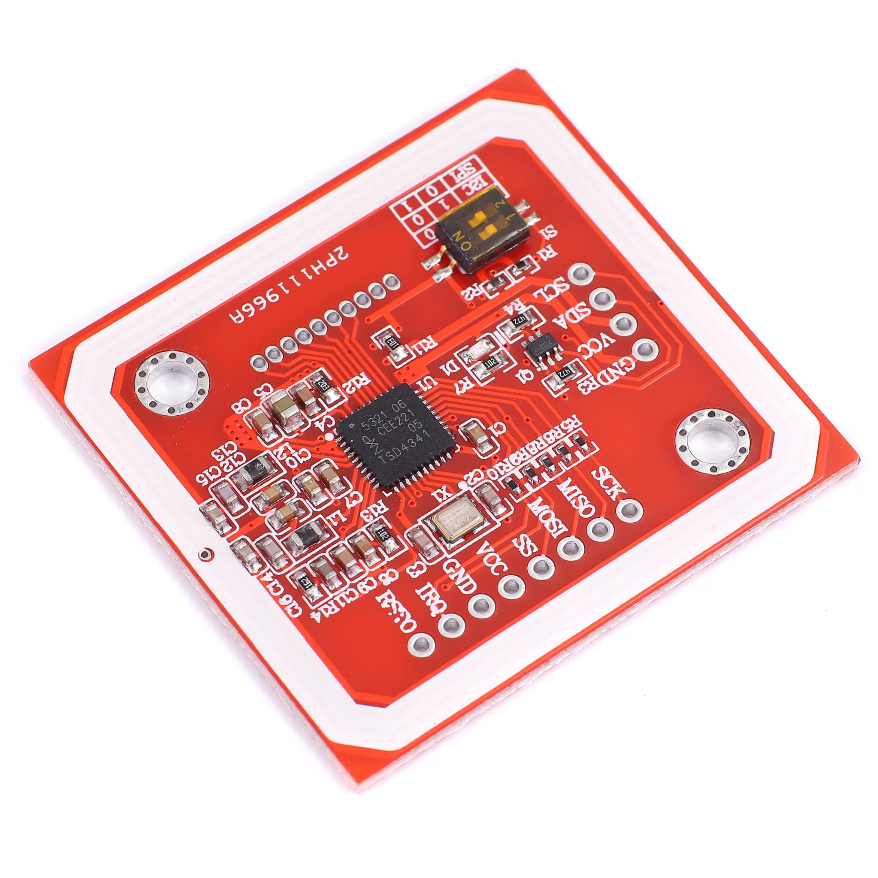
What is the PN532 NFC RFID Module?
The PN 532 module is a versatile communication board based on the popular NXP PN532 controller. NFC (Near Field Communication) widely use in modern smartphones and enables short-range wireless communication over a distance of a few centimeters. This module allows developers and electronics enthusiasts to add NFC functionality to their projects, including RFID card reading/writing, NFC tag interaction, and peer-to-peer communication. It supports multiple interfaces such as I2C, SPI, and UART, making integration simple and flexible. With extensive documentation, library support, and exposed I/O pins, the PN 532 module is ideal for Arduino, Raspberry Pi, and IoT applications.
PN532 NFC Module Pinout
The PN 532 module provides multiple communication interfaces, including I2C, SPI, and High-Speed UART (HSU). The multifunction pins allow the module to work with a wide range of microcontrollers such as Arduino, ESP32, STM32, and Raspberry Pi.
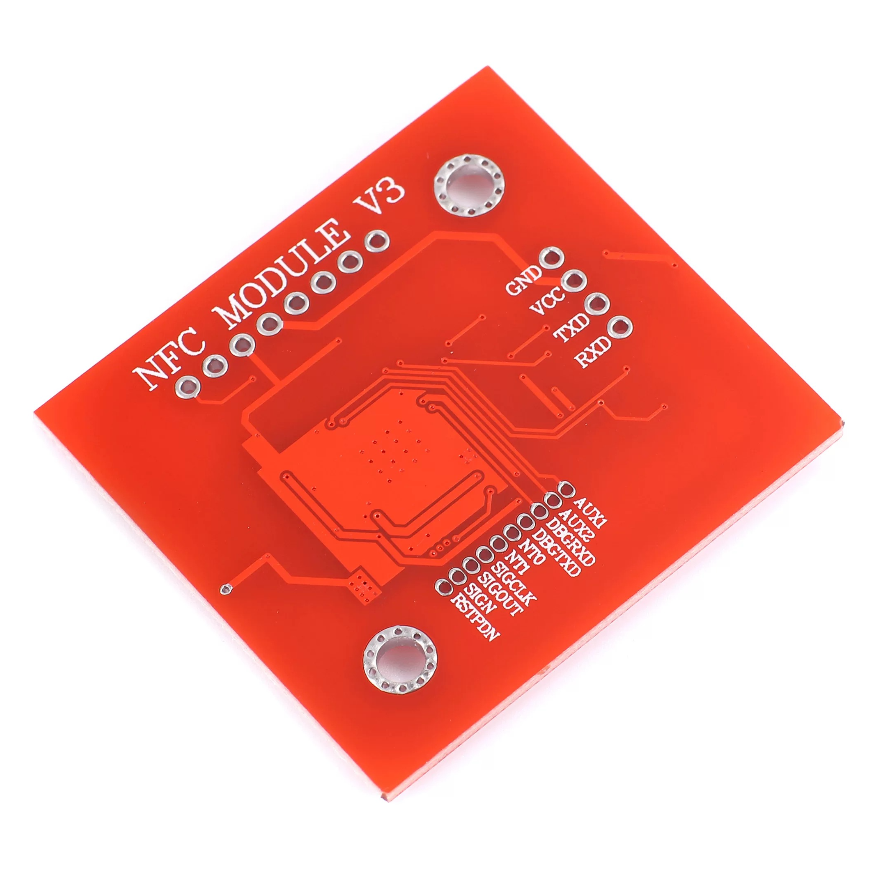
Pin | Description |
VCC | Power supply input for the module (typically 3.3V–5V, depending on the board). |
GND | Ground connection. Connect to the system ground. |
SDA / TXD | SDA: Serial Data line for the I2C interface. TXD: UART transmit pin when using High-Speed UART mode. |
SCL / RXD | SCL: Serial Clock line for the I2C interface. RXD: UART receive pin when using High-Speed UART mode. |
SCK | Serial Clock pin used for SPI communication. |
MISO | Master Input, Slave Output pin for SPI data transmission from the module to the host controller. |
MOSI | Master Output, Slave Input pin for SPI data transmission from the host controller to the PN 532. |
SS | SPI Slave Select (Chip Select) pin used to enable communication with the module. |
IRQ | Interrupt Request output pin. It notifies the host when data is available or an event occurs. |
RSTO | Reset output pin used for resetting or monitoring the reset status of the controller. |
Pinout Overview
Power Pins: VCC and GND provide power to the module.
I2C Interface: Uses SDA and SCL for simple two-wire communication.
UART Interface: Uses TXD and RXD for High-Speed UART communication.
SPI Interface: Uses SCK, MOSI, MISO, and SS for high-speed data transfer.
Control Pins: IRQ provides interrupt signaling, while RSTO is used for reset functions.
PN532 NFC Module Features and Specifications
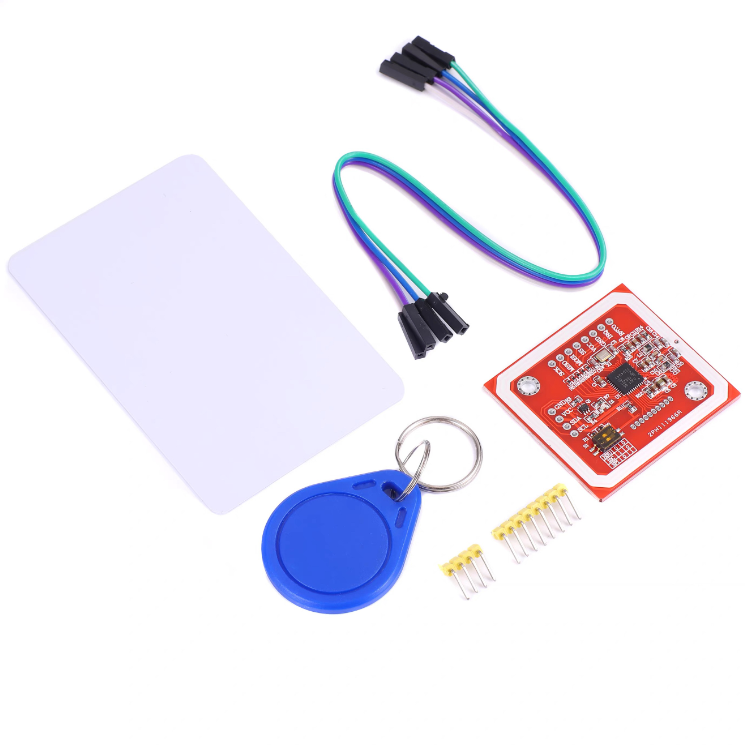
Compact Size
The PN532 module features a compact PCB design, making it easy to integrate into embedded systems, portable devices, and DIY electronics projects where space is limited.
Multiple Communication Interfaces
Supports I2C, SPI, and High-Speed UART (HSU) communication. Users can easily switch between these interfaces to match different microcontrollers and development platforms.
Comprehensive NFC Functions
The module supports multiple NFC operating modes, including:
· RFID card reading
· RFID card writing
· NFC Peer-to-Peer (P2P) communication
· NFC communication with Android smartphones
Supports Multiple RFID Card Types
Compatible with a wide range of 13.56 MHz RFID and NFC cards, including:
· MIFARE Classic 1K
· MIFARE Classic 4K
· MIFARE Ultralight
· MIFARE DESFire
· ISO/IEC 14443-4 compliant cards
· Jewel (Topaz) cards
· FeliCa cards
Reading Distance
Provides a typical reading distance of 5 cm to 7 cm, depending on the antenna size, card type, and operating environment.
Built-in Level Shifter
Includes onboard logic level conversion, supporting:
· 5V TTL for I2C and UART interfaces
· 3.3V TTL for SPI communication
This allows easy interfacing with both 3.3V and 5V microcontroller systems.
Arduino Compatible
Fully compatible with Arduino and other popular development boards. With available software libraries and plug-and-play support, it enables rapid development of NFC and RFID applications.
PN532 Specifications
Parameter | Value |
Controller IC | NXP PN532 |
Operating Voltage | 3.3V–5V |
Operating Frequency | 13.56 MHz |
Communication Interfaces | I2C, SPI, High-Speed UART |
RFID Standards | ISO/IEC 14443A/B, FeliCa, NFC |
Reading Distance | 5–7 cm |
NFC Modes | Reader/Writer, Peer-to-Peer |
RFID Functions | Read & Write |
Logic Level | 3.3V / 5V Compatible |
Compatible Boards | Arduino, ESP32, Raspberry Pi, STM32 |
Similar RFID Reader Modules
MFRC522 (RC522)
.png)
The MFRC522, also called the RC522 RFID module, is another popular 13.56 MHz RFID reader from NXP. It is designed as a low-cost, low-voltage, highly integrated solution for contactless communication.
Key features include:
· Operates at 13.56 MHz
· Supports ISO14443A
· Compatible with MIFARE Classic cards
· SPI communication interface
· Data rates up to 424 kbps
· Compact size and low power consumption
· Ideal for access control, attendance systems, and smart card applications
Compared with the PN532, the RC522 focuses primarily on RFID card communication and does not provide the full NFC feature set such as peer-to-peer communication or smartphone NFC interaction.
PN532 vs RC522
Feature | PN532 | RC522 |
Frequency | 13.56 MHz | 13.56 MHz |
RFID Read/Write | Yes | Yes |
NFC Support | Yes | Limited |
Peer-to-Peer | Yes | No |
Android NFC | Yes | No |
Interfaces | I2C, SPI, UART | SPI |
Supported Cards | MIFARE, FeliCa, ISO14443, Jewel | Mainly MIFARE |
Ease of Development | Excellent | Good |
Where to Use PN532 NFC Module?
Suitable whenever require NFC or RFID functionality.
Common applications include:
· Contactless access control
· Smart door locks
· Attendance systems
· Smart home automation
· IoT authentication
· Electronic payment demonstrations
· Inventory management
· NFC-enabled product identification
· Interactive exhibits
· Smartphone-based automation
How to Use PN532 NFC Module?
The module supports three communication interfaces. Select the desired interface by configuring the onboard DIP switches.
S1 | S2 | Interface |
OFF | OFF | High-Speed UART (HSU) |
ON | OFF | I2C |
ON | ON | SPI |
Basic Steps
1. Select the desired interface using the DIP switches.
2. Connect the module to your microcontroller.
3. Install the PN532 library.
4. Upload an example sketch.
5. Bring an NFC tag or RFID card within 5–7 cm of the antenna.
6. Read the card UID or write data to supported tags.
The module is compatible with Arduino, ESP32, Raspberry Pi, STM32, and many other development platforms.
Applications
RFID Card Reading and Writing
The PN 532 can read and write multiple types of RFID cards, making it ideal for authentication, attendance, access control, and inventory management.
NFC Peer-to-Peer Communication
Two modules can communicate wirelessly using NFC Peer-to-Peer mode, enabling short-range data exchange between embedded devices.
Android Smartphone Communication
The module can communicate directly with NFC-enabled Android devices. For example, it can write a URL to an NFC tag, allowing a smartphone to automatically open a webpage when the tag is tapped.
Smart Home Automation
Use NFC cards or tags to trigger home automation actions such as turning lights on, unlocking doors, or activating predefined scenes.
Embedded IoT Projects
The PN 532 widely use in IoT devices for secure user authentication, configuration, and device pairing.
PN532 Datasheet PDF
For complete electrical characteristics, timing diagrams, communication protocols, and reference circuits, you can check the data sheet PDF.
Frequently Asked Questions [FAQ]
Can PN532 emulate nfc tags?
Yes. The PN 532 supports card emulation mode, allowing it to behave like an NFC tag for compatible devices. This feature is commonly used in NFC demonstrations, testing, and embedded applications.
What NFC standards does PN532 support?
The PN 532 supports ISO/IEC 14443 Type A and Type B, FeliCa, Jewel/Topaz, and NFC Forum communication modes, including Reader/Writer, Peer-to-Peer, and Card Emulation.
What is the difference between PN532 and RC522?
The PN532 offers full NFC functionality, including smartphone communication and peer-to-peer mode, while the RC522 mainly supports MIFARE RFID card reading and writing through SPI. The PN532 also supports more communication interfaces and a wider range of NFC standards.
What is the use of PN532?
Used for RFID card reading and writing, NFC tag communication, smartphone interaction, secure authentication, contactless access control, attendance systems, smart locks, IoT devices, and embedded NFC development.
Why should the RC522 module be powered with 3.3 V instead of 5V?
The RC522 IC operates at 3.3V logic and is not 5V tolerant. Applying 5V directly permanently damage the chip. Many RC522 modules do not include onboard level shifting, so recommend a regulated 3.3V supply.
What is the frequency of PN532 NFC?
The PN532 operates at the 13.56 MHz high-frequency (HF) RFID/NFC band, which is the standard frequency used for NFC communication and many contactless smart cards.
What kind of antenna does PN532 use?
The PN 532 typically works with a 13.56 MHz PCB loop antenna integrated onto the module. Depending on the design, it can also interface with external NFC antennas to achieve optimized performance for specific applications.
Conclusion
The PN532 module is a powerful and flexible solution for adding NFC and RFID functionality to embedded systems and DIY electronics projects. With support for I2C, SPI, and High-Speed UART, it can easily interface with Arduino, ESP32, Raspberry Pi, STM32, and other microcontrollers. Its ability to read and write multiple RFID card types, communicate with NFC-enabled smartphones, and support peer-to-peer communication makes it suitable for access control, smart home automation, IoT devices, attendance systems, and contactless applications. Thanks to its extensive documentation, software libraries, and ease of use, the PN532 remains one of the best NFC modules for both beginners and professional developers.
Read More:
1. OPT101 Module: Specifications, Features and Arduino Guide
HOT NEWS
TP4056 Charging Module Pinout, Working, and Applications
TP4056 Charging Module Pinout, Working, and Applications
2026-01-23
LR41 Battery Guide: Specifications, Equivalents, and Uses
LR41 Battery Specifications, Equivalents, and Uses
2025-12-14
Understanding A 0603 Resistor
0603 resistor,dimensions,marking code, values
2025-05-29
Understanding The CD4051 Analog Multiplexer
CD4051 analog multiplexer
2025-06-30
MT3608 Boost Converter - An In-Depth Guide
MT3608 Boost Converter
2025-09-04
Complete Guide to the 220 Ohm Resistor
220 Ohm Resistor
2025-07-28
The 0402 Resistor: A Comprehensive Guide
0402 Resistor
2025-05-06
Guide To The XL6009 Boost Converter
XL6009 Boost Converter
2025-09-05
Mini MP1584 DC-DC 3A Buck Converter Module: Complete Guide
Mini MP1584 DC-DC 3A Buck Converter Module: Complete Guide
2026-03-26
What Is A 1206 Resistor?
1206 resistor dimensions,footprint,value
2025-06-05