




 BOM
BOM Cart
Cart Product Catalog
SHT30 is a compact digital temperature and humidity sensor designed for accurate environmental monitoring in embedded and IoT applications. Based on Sensirion’s SHT3x platform, it provides calibrated digital measurements through an I²C interface and supports a wide 2.15V~5.5V supply range. This article introduces the SHT30 sensor, including its pinout, technical specifications, applications, module features, and comparison with the DHT22, helping you understand how it can be used in temperature and humidity monitoring projects.
5. SHT30 Temperature and Humidity Sensor Module
6. SHT30 vs DHT22 Temperature and Humidity Sensor
7. Frequently Asked Questions [FAQ]
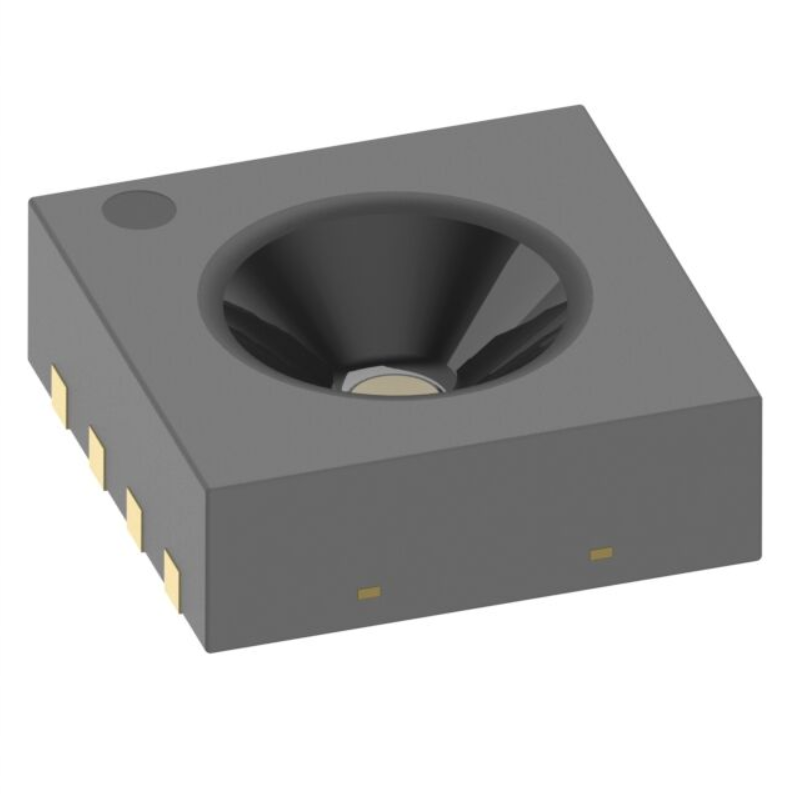
What is SHT30 Sensor?
SHT30 sensor is a digital temperature and humidity sensor from Sensirion's SHT3x-DIS series. It is designed for accurate, reliable, and fast measurement of relative humidity and temperature while providing a simple I²C digital interface. Compared with the previous SHT2x generation, the SHT3x platform provides improved signal processing, higher reliability, flexible communication, and selectable I²C addresses.
The SHT 30 uses a CMOSens® sensor chip and provides fully calibrated, linearized, and temperature-compensated digital measurements. Its wide 2.15V~5.5V supply range makes it suitable for different embedded systems and controller platforms.
SHT30 sensor communicates through an I²C interface with communication speeds up to 1MHz. Two selectable I²C addresses allow multiple devices to be used on the same bus. The compact DFN package measures only 2.5mm × 2.5mm with a height of 0.9mm, making the sensor suitable for space-constrained electronic products.
For module applications, the SHT30 chip is commonly mounted on a small breakout board with an I²C interface, allowing it to connect to microcontrollers such as Arduino, ESP32, STM32, Raspberry Pi, and other embedded platforms.
Note: The SHT3x family includes SHT30, SHT31, and SHT35. Their specifications are different. The ±1.5%RH and ±0.1°C accuracy figures are associated with the higher-end SHT35 rather than the SHT30.
SHT30 Sensor Pinout
The SHT30 sensor uses an 8-pin DFN package. The main communication pins are SDA and SCL, while ADDR selects the I²C address.
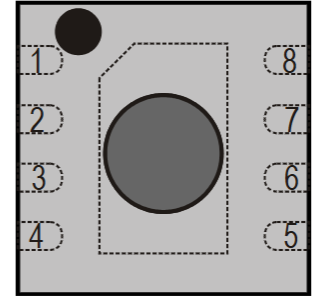
Pin | Name | Function |
1 | SDA | Serial data input/output |
2 | ADDR | I²C address selection; connect to logic high or low, do not leave floating |
3 | ALERT | Alarm-condition output; leave floating if unused |
4 | SCL | Serial clock input/output |
5 | VDD | Supply voltage input |
6 | nRESET | Active-low reset input; may be left floating if unused |
7 | R | No electrical function; connect to VSS |
8 | VSS | Ground |
The SHT30 SDA and SCL pins provide the I²C communication interface. The ADDR pin determines the sensor's I²C address, allowing two SHT30 devices to share the same I²C bus when configured with different address levels.
The nRESET pin can be connected to VDD through a series resistor of at least 2kΩ when required. If the reset function is not needed, it can be left floating according to the device recommendations.
SHT30 Sensor Technical Specifications
SHT 30 sensor combines a humidity sensing element, temperature sensor, signal processing, and digital communication in a compact package. Its calibrated digital output simplifies integration with microcontrollers and reduces the need for external signal-conditioning circuits.
Parameter | Specification |
Sensor Type | Digital temperature and humidity sensor |
Supply Voltage | 2.15V~5.5V |
Interface | I²C |
I²C Speed | Up to 1MHz |
I²C Addresses | 2 selectable addresses |
Humidity Output | Digital |
Temperature Output | Digital |
Humidity Accuracy | Typically ±3%RH for SHT30 |
Temperature Accuracy | Typically ±0.3°C for SHT30 |
Package | 8-pin DFN |
Package Size | 2.5mm × 2.5mm × 0.9mm |
Calibration | Fully calibrated |
Signal Processing | Linearized and temperature compensated |
Traceability | NIST traceability |
Startup | Fast startup |
Measurement | Fast measurement time |
The SHT30 digital output is already calibrated and compensated, making it convenient for applications that need temperature and humidity information without designing an analog measurement circuit.
The wide 2.15V~5.5V supply range also provides compatibility with many 3.3V and 5V embedded systems. However, the actual electrical configuration of an SHT30 module should be checked because module-level pull-up resistors, regulators, and other components can affect the usable voltage range.
SHT30 Sensor Applications
SHT 30 sensor can be used in a wide range of temperature and humidity monitoring applications where compact size, digital communication, and reliable measurements are required.
Typical applications include:
Environmental Monitoring
Can monitor indoor temperature and relative humidity in homes, offices, laboratories, and other environments. Its digital I²C interface makes it easy to connect to a microcontroller and display or record environmental data.
HVAC Systems
Can be integrated into heating, ventilation, and air-conditioning systems to provide temperature and humidity feedback. The measurements can be used by control systems to adjust ventilation, heating, or cooling conditions.
Weather Stations
The sensor is suitable for compact weather-monitoring equipment. A controller can periodically read temperature and humidity data and combine it with measurements from pressure, light, or other environmental sensors.
IoT Devices
The sensor works well with ESP32, Arduino, STM32, Raspberry Pi, and other connected platforms. Its I²C communication allows environmental measurements to be collected and transmitted to an IoT monitoring system.
Smart Home Equipment
Can use in smart thermostats, air-quality monitors, humidifiers, dehumidifiers, and other home automation products that require temperature and humidity information.
Industrial and Equipment Monitoring
Can also be used to monitor environmental conditions around electronic equipment, storage systems, and control cabinets where excessive temperature or humidity may affect operation.
SHT30 Temperature and Humidity Sensor Module
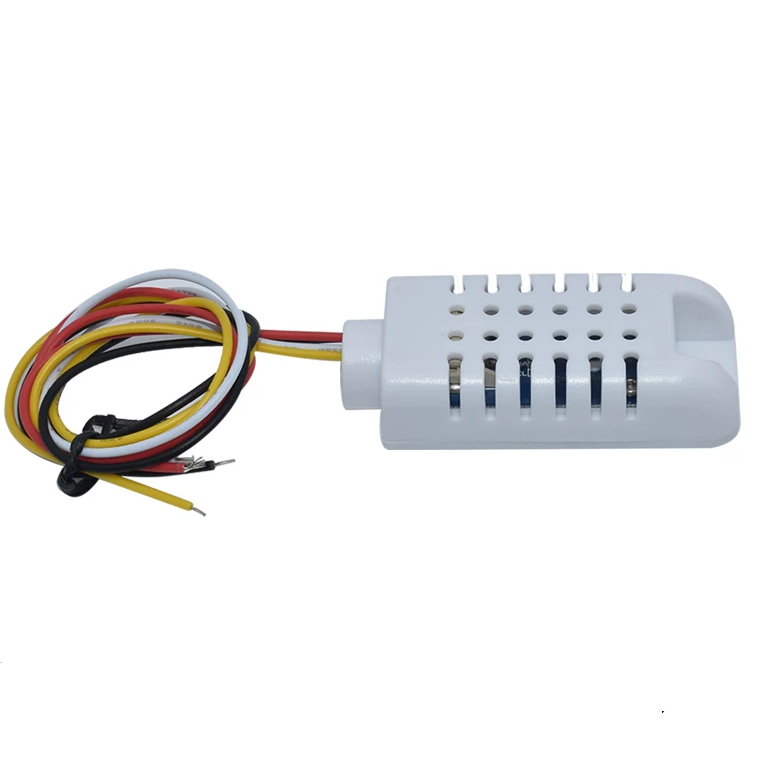
SHT30 temperature and humidity sensor module is a breakout board based on the SHT30 digital sensor. It is commonly available as an I²C temperature and humidity module and may include a protective housing or probe-style enclosure depending on the module design.
The SHT3x series represents the next generation of Sensirion's digital humidity and temperature platform. The family includes the lower-cost SHT30, standard SHT31, and higher-performance SHT35 versions. They share the same general SHT3x architecture but provide different accuracy specifications and options.
The module communicates with a host controller through SDA and SCL, so only two signal lines are required for communication. This makes it convenient for development boards and embedded systems where GPIO resources are limited.
Compared with older single-wire humidity sensors, the SHT30 module provides a digital I²C interface and compact sensor construction. It can therefore be integrated into development projects without requiring an external analog-to-digital conversion circuit.
When using an SHT 30 module, check the module's actual supply voltage, I²C pull-up configuration, connector pinout, and address setting because these details can vary between module manufacturers.
SHT30 vs DHT22 Temperature and Humidity Sensor
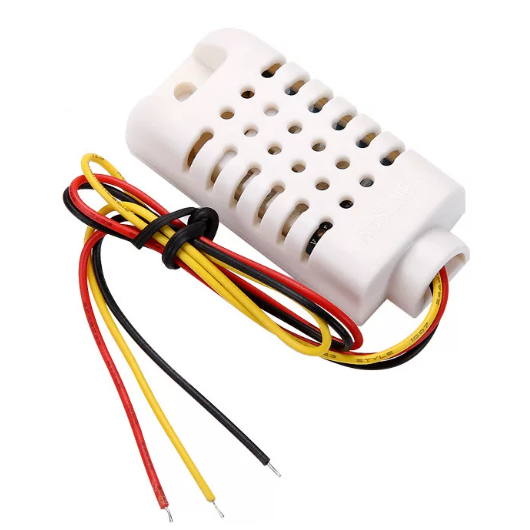
SHT30 vs DHT22 is a common comparison when selecting a digital temperature and humidity sensor for an embedded project. Both devices provide digital measurements, but they use different communication interfaces and have different hardware characteristics.
Parameter | SHT30 | DHT22 |
Sensor Type | Digital temperature and humidity sensor | Digital temperature and humidity sensor |
Communication | I²C | Single-wire digital interface |
Supply Voltage | 2.15V~5.5V | Typically 3.3V~5.5V |
Humidity Range | 0~100%RH | 0~100%RH |
Humidity Accuracy | Typically ±3%RH | ±2%RH |
Temperature Range | Depends on operating conditions | -40~80°C |
Temperature Accuracy | Typically ±0.3°C | ±0.5°C |
I²C Address | 2 selectable addresses | Not applicable |
Communication Speed | Up to 1MHz | Single-wire protocol |
Package | Sensor/module package | Sensor/module package |
Main Advantage | I²C interface and compact design | Simple single-wire connection |
The SHT30 interface is one of its main differences from the DHT22. I²C allows multiple compatible devices to share the same communication bus, while the DHT22 uses its own single-wire digital protocol.
The DHT22 sensor is commonly used in simple Arduino projects because its interface is straightforward and many example libraries are available. It provides a relatively wide temperature and humidity measurement range.
The SHT30 sensor is more suitable when a compact sensor with an I²C interface is preferred. The final choice depends on the controller, required accuracy, measurement speed, available PCB space, and software requirements.
Frequently Asked Questions [FAQ]
Is DHT22 better than DHT11?
DHT22 generally provides a wider temperature and humidity measurement range and better accuracy than DHT11. DHT22 supports approximately -40~80°C and 0~100%RH, while DHT11 is designed for a narrower range. For simple low-cost projects DHT11 can be sufficient, while DHT22 provides more measurement capability.
What is the best sensor for temperature and humidity?
There is no single temperature and humidity sensor that is best for every application. SHT30, SHT31, SHT35, SHT41, SHT45, DHT22, and similar devices have different accuracy, interfaces, operating ranges, response times, sizes, and prices. Selection should be based on the requirements of the specific application.
How much does a temperature sensor cost?
The cost of a temperature sensor depends on the sensing technology, accuracy, package, interface, operating range, manufacturer, and purchase quantity. Basic digital sensors can be inexpensive, while highly accurate industrial sensors cost more. Module versions may also cost more than the individual sensor IC.
Do cheap humidity meters work?
Cheap humidity meters can provide useful approximate measurements, but their accuracy depends on the sensing element, calibration, temperature compensation, aging, and overall instrument design. For applications requiring reliable measurements, a calibrated sensor such as an SHT-series device should be selected according to its specified accuracy and operating conditions.
What are the key differences between the SHT45 and SHT41 sensors?
SHT45 and SHT41 belong to Sensirion's SHT4x family but target different performance levels. They differ in specifications such as humidity accuracy, temperature accuracy, response characteristics, and available features. When choosing between them, compare the current datasheet specifications with the required measurement accuracy, operating environment, package, and system design.
Which temperature and humidity sensor is the most accurate?
Accuracy depends on the specific sensor model and operating conditions. Within the SHT3x family, the SHT35 is specified for higher accuracy than the SHT30. Other Sensirion families, including SHT4x devices, offer different accuracy levels. Always compare the manufacturer's specified temperature and humidity accuracy for the required measurement range.
How to test if a humidity sensor is accurate?
A humidity sensor can be tested by comparing its readings with a calibrated reference instrument under controlled temperature and humidity conditions. Place both sensors in the same stable environment and allow sufficient time for equilibration. Repeat measurements at several humidity levels to identify offset, drift, and response differences.
What is the average lifespan of a humidity sensor?
The lifespan of a humidity sensor depends on operating temperature, humidity exposure, contaminants, condensation, chemical exposure, and storage conditions. There is no single lifespan applicable to every application. Following the manufacturer's recommended operating and storage conditions helps maintain long-term measurement performance.
Is a hygrometer the same as a humidity sensor?
A hygrometer is a device used to measure relative humidity, while a humidity sensor is the sensing component that detects moisture and produces a corresponding signal. A complete hygrometer may contain a humidity sensor, temperature sensor, signal-processing electronics, display, and other circuitry.
Conclusion
SHT30 sensor is a compact digital temperature and humidity solution based on Sensirion's SHT3x platform. It combines calibrated temperature and humidity measurement with an I²C interface, two selectable addresses, fast communication, and a wide 2.15V~5.5V supply range.
Compared with the DHT22, SHT30 offers an I²C interface and a compact sensor package, making it convenient for embedded, IoT, environmental monitoring, and smart-home applications. When selecting between SHT30, SHT31, SHT35, SHT41, SHT45, or DHT22, the appropriate device should be determined from the required accuracy, interface, operating conditions, size, and application requirements.
Read More:
1. SHT31 Temperature & Humidity Sensor Module & Compare BME280
2. ADS1220 24-Bit ADC: Pinout, Alternatives, and Module Board
3. TP5100 Battery Charger Module Board 2A Lithium and vs TP4056
Sensirion SHT30 Datasheet:
HOT NEWS
TP4056 Charging Module Pinout, Working, and Applications
TP4056 Charging Module Pinout, Working, and Applications
2026-01-23
LR41 Battery Guide: Specifications, Equivalents, and Uses
LR41 Battery Specifications, Equivalents, and Uses
2025-12-14
Understanding A 0603 Resistor
0603 resistor,dimensions,marking code, values
2025-05-29
MT3608 Boost Converter - An In-Depth Guide
MT3608 Boost Converter
2025-09-04
The 0402 Resistor: A Comprehensive Guide
0402 Resistor
2025-05-06
Complete Guide to the 220 Ohm Resistor
220 Ohm Resistor
2025-07-28
Understanding The CD4051 Analog Multiplexer
CD4051 analog multiplexer
2025-06-30
What Is A 1206 Resistor?
1206 resistor dimensions,footprint,value
2025-06-05
Guide To The XL6009 Boost Converter
XL6009 Boost Converter
2025-09-05
120 Ohm Resistor- Specifications, Applications, and Features
2025-05-12