




 BOM
BOM Cart
Cart Product Catalog
The 2N2222A transistor is one of the most widely used general-purpose NPN bipolar junction transistors (BJTs) in electronic circuits. Known for its fast switching speed, reliable current handling, and low saturation voltage, the transistor commonly find in switching, amplification, and signal control applications.
This article provides a detailed overview of the transistor, including its characteristics, pin configuration, specifications, applications, alternatives, advantages, and frequently asked questions.
1. What Is a 2N2222A Transistor?
2. Characteristics of 2N2222A NPN Transistor
3. 2N2222A Pin Configuration, Pinout and Symbol
5. Specifications of 2N2222A Transistor
8. Difference Between 2N2222 and 2N2222A
9. 2N2222A Alternative and Replacement
10. Advantages of 2N2222A Transistor
11. Frequently Asked Questions [FAQ]

What Is a 2N2222A Transistor?
The 2N2222A is a widely used NPN bipolar junction transistor (BJT), designed for both switching and amplification applications. It recognizes for its reliability, high speed, and ability to handle moderate currents, making it suitable for a wide range of electronic circuits. The transistor is capable of handling collector currents up to 600 mA, with short-term peaks reaching 800 mA, which allows it to drive devices such as LEDs, small motors, relays, and buzzers efficiently.
The 2N2222A often house in TO-18 metal can, TO-92 plastic through-hole, or SOT-23 surface-mount packages, making it adaptable for both traditional and modern PCB designs. One of its key advantages is its fast switching capability, with a transition frequency of approximately 300 MHz, which makes it ideal for digital circuits, pulse generators, and microcontroller-based designs.
Additionally, the transistor exhibits low saturation voltage, low leakage currents, and stable current gain (hFE) over a wide range of collector currents. These characteristics ensure that it operates efficiently as a switch and provides reliable amplification in analog circuits.
Because of its robustness, affordability, and versatility, the 2N2222A is a staple component in educational projects, hobby electronics, and professional industrial circuits, making it one of the most popular general-purpose transistors available worldwide.
Characteristics of 2N2222A NPN Transistor
The 2N2222A is a widely use general-purpose bipolar junction transistor known for its balanced electrical performance and fast response. One of its defining characteristics is its ability to handle relatively high collector current, typically up to 600mA, making it suitable for both signal processing and moderate-power switching applications. The transistor supports a collector-emitter voltage of up to 40 V, allowing safe operation in low- to mid-voltage circuits.
Another key characteristic is its high switching speed. With a transition frequency of around 300 MHz, it performs well in high-frequency and fast digital switching circuits. The device also provides a stable DC current gain (hFE) over a wide range of collector currents, which helps maintain consistent performance in amplifier and driver circuits.
The circuit features low saturation voltage, reducing power loss when used as a switch, and low leakage current, which improves efficiency and reliability. It offers good thermal stability and can dissipate up to 500 mW of power under proper conditions. Because these characteristics, the transistor remains a popular choice for switching, amplification, and control applications in electronic designs.
2N2222A Pin Configuration, Pinout and Symbol
The transistor has a simple three-terminal configuration that makes it easy to use in both switching and amplifier circuits. It is an NPN bipolar junction transistor, and its operation depends on controlling the current between the collector and emitter using a small base current.

Pin 1 – Emitter:
The emitter is the terminal through which current flows out of the transistor. In normal NPN operation, electrons move from the emitter toward the collector. This pin usually connect to ground or the lowest potential in the circuit.
Pin 2 – Base:
The base is the control terminal of the component. A small current applied to the base allows a much larger current to flow between the collector and emitter. Proper base biasing determines whether the transistor operates in cutoff, active, or saturation mode.
Pin 3 – Collector:
The collector is the terminal through which current flows into the transistor. It typically connect to the load and a positive voltage supply in switching and amplifier applications.
Pinout Notes
In TO-18 metal package, the pins arrange circularly.
In TO-92 plastic package, pin order vary by manufacturer.
Always verify the datasheet before PCB design.
Symbol

The 2N2222A uses the standard NPN transistor symbol, with the arrow pointing outward from the emitter.
2N2222A Features
The transistor is one of the most widely used NPN bipolar junction transistors in electronics, known for its versatility, reliability, and robust performance. Its features make it suitable for a wide range of applications, including switching, amplification, and signal interfacing in both educational and industrial projects.
One of the most important features is its high collector current capacity, which can reach up to 600 mA continuously, with short pulses up to 800 mA. This makes it capable of driving moderate-current loads such as relays, LEDs, small DC motors, and buzzers, which is a significant advantage over many small-signal transistors.
Another key feature is its high switching speed. With a transition frequency of approximately 300 MHz, the 2N2222A is well-suited for high-speed switching applications in digital circuits, pulse generators, and microcontroller interfacing. Its low saturation voltage ensures that it dissipates minimal power when fully turned on, improving efficiency and reducing heat generation in switching applications.
The transistor also offers stable DC current gain (hFE) across a wide range of collector currents, which ensures reliable amplification in analog circuits. This makes it a dependable choice for audio preamplifiers, sensor signal conditioning, and other small- to medium-signal amplification tasks.
Additionally, the 2N 2222A is available in multiple package types, including TO-18 metal can, TO-92 plastic through-hole, and SOT-23 surface-mount, offering flexibility for different circuit layouts and manufacturing processes. Its low leakage current, robust thermal stability, and wide operating voltage range further enhance its reliability in various environments.
Finally, the transistor is cost-effective, widely available, and easy to use, making it a staple in both hobbyist and professional electronics projects. Its combination of high current handling, fast switching, and reliable amplification makes it one of the most versatile and practical transistors for general-purpose applications.
Specifications of 2N2222A Transistor
Parameter | Value |
Transistor Type | NPN Bipolar Junction Transistor |
Package Type | TO-18 (Metal), TO-92, SOT-23 (SMD) |
Collector–Emitter Voltage | 40 V |
Collector–Base Voltage | 60 V |
Emitter–Base Voltage | 5 V |
Maximum Collector Current | 600 mA (800 mA peak) |
Maximum Base Current | 200 mA |
Power Dissipation | 500 mW |
DC Current Gain (hFE) | 75 – 300 |
Transition Frequency | 300 MHz |
Collector Capacitance | 8 pF (typical) |
Emitter Capacitance | 25 pF (typical) |
Collector–Emitter Saturation Voltage | 0.3 V (typical) |
Noise | Low |
Maximum Junction Temperature | 150 °C |
Switching Speed | Fast |
Mounting Type | Through Hole/ SMD |
Package and Manufacturer of 2N2222A Transistor
The circuit is one of the most versatile and widely used NPN bipolar junction transistors in electronics, and part of its popularity comes from the variety of packages and manufacturers available. This variety allows designers to select the most suitable version based on space constraints, assembly methods, and thermal performance, making it ideal for both hobbyist projects and professional industrial applications.
Package Types:
2N2222A TO-18
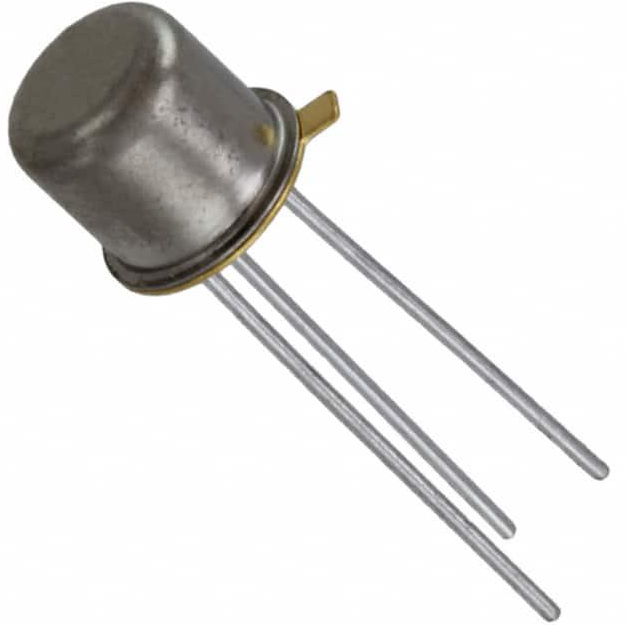
The TO 18 metal can package is the original and classic form of this transistor. It provides excellent thermal dissipation, mechanical durability, and protection from environmental stress, making it suitable for industrial, military, and high-reliability applications. The metal package ensures consistent performance under varying temperature conditions and protects the transistor from physical and electrical damage.
2N2222A 331 Transistor TO-92
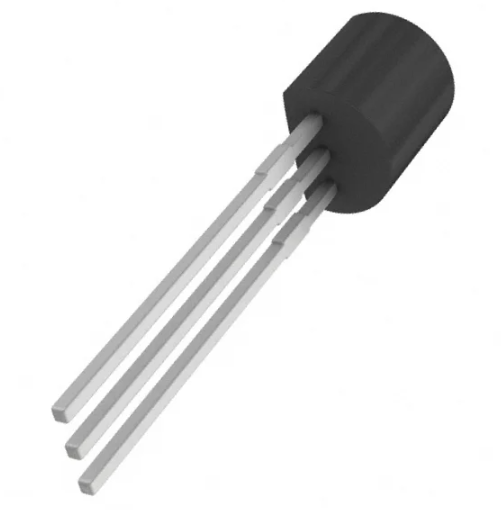
The TO-92, sometimes referred to as the 2N2222A-331 transistor, is a plastic through-hole package that widely use in prototyping, educational kits, and general-purpose circuit designs. Its lead configuration is ideal for breadboards and manual soldering, making it popular in learning environments and DIY electronics projects.
2N2222A SMD SOT23
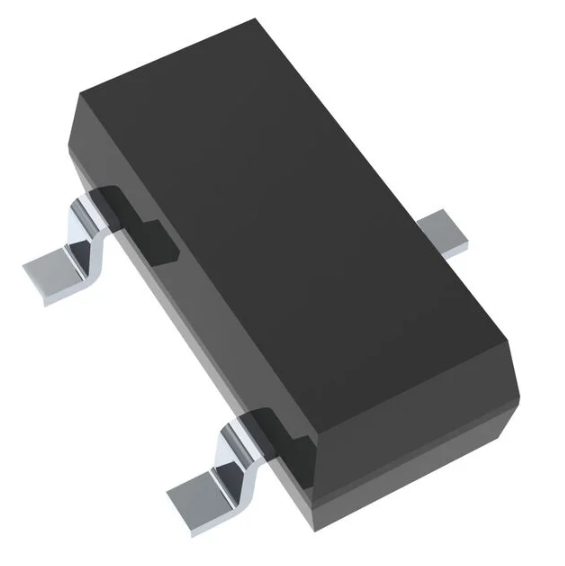
The SMD SOT-23 package intend for surface-mount technology and widely use in modern electronic devices where PCB space is limited. This compact package supports automated pick-and-place assembly and is ideal for high-density circuit boards, portable electronics, and embedded systems. Despite its small size, it retains the transistor’s reliable electrical characteristics and can handle moderate currents efficiently.
Manufacturer 2N2222A Motorola
The Motorola is one of the most recognized and trusted versions, known for consistent quality, reliability, and long-term availability.
Manufacturer ST 2N2222A
The STMicroelectronics (ST) manufacture using modern semiconductor processes, providing stable electrical characteristics, high performance, and comprehensive datasheet support. Both manufacturers ensure that the 2N2222A meets international standards, making it a dependable choice for both commercial and industrial electronics.
2N2222A PDF Datasheet
Where to Use 2N2222A
The transistor commonly use in a wide range of electronic circuits where require reliable switching and moderate signal amplification. Because its high switching speed, good current gain, and ability to handle higher collector currents, it is suitable for both digital and analog applications.
The 2N2222A frequently use in switching circuits such as relay drivers, LED drivers, buzzers, and small DC motor control. Its ability to handle higher current makes it especially useful in circuits where a microcontroller or logic IC needs to control loads that require more current than a GPIO pin can supply.
In signal amplification, the transistor works well in low- and medium-frequency amplifier stages, including audio preamplifiers and sensor signal conditioning circuits. It provides stable amplification with low distortion when properly biased.
The 2N 2222A often consider similar to the BC547, as both are NPN transistors used for general-purpose applications. However, the 2N2222A can handle higher current and power dissipation than the BC547, making it more suitable for switching loads, while the BC547 commonly prefer for low-noise, low-current signal amplification.
Because of this versatility, the transistor widely use in educational projects, prototyping, and commercial electronic designs.
2N2222A Applications
The transistor is a highly versatile and widely used NPN bipolar junction transistor, suitable for a broad range of switching and amplification applications. Its popularity comes from its ability to handle moderate currents, fast switching speed, low saturation voltage, and stable current gain, making it a key component for hobbyist projects, educational experiments, and professional electronic designs.
Use a 2N2222A in a Touch Switch Circuit:
One of the practical applications of the component is in touch-activated switch circuits. In such circuits, the transistor acts as a sensitive electronic switch. When apply a small current or voltage from a touch sensor to the base, it allows a much larger current to flow from the collector to the emitter. This can use to turn on LEDs, buzzers, or small relays in response to human touch. The 2N2222A’s fast switching capabilities ensure an almost instantaneous response, which is ideal for interactive electronics, home automation systems, and DIY projects. Its ability to handle moderate currents safely allows it to control loads that cannot directly drive by low-power sensors or microcontroller outputs.
Transistor as an Amplifier:
The circuit also commonly use as a signal amplifier. In a common-emitter configuration, it can amplify weak electrical signals from microphones, sensors, or other low-current sources. It provides a stable voltage and current gain, enabling the amplified signal to drive larger loads or feed subsequent stages of an electronic circuit. Applications include audio preamplifiers, sensor signal conditioning, low-frequency analog circuits, and control signal amplification.
Because of its dual functionality as a switch and amplifier, combined with its robustness, reliability, and wide availability, the 2N2222A remains a staple in electronics design. Its flexibility allows it to implement in both educational kits and commercial electronic systems, making it one of the most versatile and widely used general-purpose transistors available today.
Difference Between 2N2222 and 2N2222A
Parameter | 2N2222 | 2N2222A |
Transistor Type | NPN BJT | NPN BJT |
Collector-Emitter Voltage | 30 V | 40 V |
Collector Current | 600 mA | 600 mA |
Transition Frequency | 250 MHz | 300 MHz |
Power Dissipation | 500 mW | 500 mW |
Package | Through Hole | Through Hole |
The 2N2222 and 2N2222A are both NPN bipolar junction transistors (BJTs) that are widely used in switching and amplification circuits. While they share many similarities in function and application, there are several important differences in their electrical specifications that make each suitable for specific scenarios.
The 2N2222 transistor has a collector-emitter voltage rating of 30 V, a maximum collector current of 600 mA, a transition frequency of 250 MHz, and a power dissipation of 500 mW. It commonly find in through-hole packages such as TO-18 or TO-92, making it ideal for traditional breadboard projects, prototyping, and general-purpose switching or amplification circuits with moderate voltage requirements.
The 2N2222A, on the other hand, is an improved and more robust version of the 2N2222. It has a higher collector-emitter voltage rating of 40 V, the same maximum collector current of 600 mA, a higher transition frequency of 300 MHz, and the same power dissipation of 500 mW. The higher voltage tolerance and faster operation make the 2N2222A better suited for higher-voltage or faster-switching applications, such as high-speed logic circuits, pulse generation, or circuits requiring slightly more margin in voltage handling.
While both transistors are functionally similar and can often use interchangeably in low- to medium-power circuits, the 2N2222A provides enhanced performance, greater reliability, and wider application flexibility. Designers often prefer the 2N2222A in situations where higher voltage tolerance, improved switching speed, and more robust operation are desirable, while the 2N2222 remains suitable for general-purpose and educational applications.
This subtle improvement ensures that the 2N2222A remains a preferred choice in modern electronic designs, particularly where require durability and slightly higher performance.
2N2222A Alternative and Replacement
The 2N2222A is one of the most widely used NPN bipolar junction transistors (BJTs) in electronics because its versatility, reliability, and moderate current handling capabilities. However, in certain cases, designers require alternatives or replacements because of component availability, package preference, or specific electrical requirements of a circuit. Fortunately, there are numerous suitable options that can serve as effective substitutes while maintaining similar performance characteristics.
NPN Type Replacement Transistor
Include BC549 and BC547, which are suitable for low-current switching and signal amplification. These transistors are popular in educational projects and low-power electronic circuits. Other NPN alternatives include S9014, BC637, BC639, 2N2369, 2N3055, 2N3904, and 2SC5200, which offer varying levels of collector current, voltage ratings, gain, and package types. These options provide flexibility for different circuit requirements, whether the application involves low-power signal amplification or moderate-current switching.
PNP Type Replacement Transistor
For PNP-type replacements, transistors such as 2N3906 and 2N2907 can use in complementary circuits. PNP transistors often pair with NPN devices like the 2N2222A in push-pull amplifier designs or complementary switching circuits, allowing designers to create balanced and efficient systems.
2N2222A Substitute Transistors
Additional substitutes include BC148, 2N4403, MPS2222, PN2222, KN2222, and KTN2222, which are available in through-hole or surface-mount packages such as TO-92, TO-18, or SOT-23. When selecting a replacement, it is important to carefully compare specifications such as collector current, collector-emitter voltage, power dissipation, DC current gain (hFE), switching speed, and package type to ensure compatibility with the original transistor.
The wide range of alternatives and substitutes ensures that electronics designers, hobbyists, and engineers can maintain circuit functionality and reliability even if the 2N2222A is unavailable. This flexibility makes it possible to continue developing and implementing both switching and amplification circuits without major design changes. By choosing the right alternative, circuits can perform efficiently and reliably across a variety of applications, from hobbyist projects to industrial and commercial electronics systems.
Advantages of 2N2222A Transistor
The 2N2222A is one of the most widely used NPN bipolar junction transistors in electronics, and its popularity is because several distinct advantages that make it versatile for a variety of applications. One of the primary benefits is its high collector current capability, which can reach up to 600 mA continuously, with short peaks up to 800 mA. This allows it to drive moderate-current loads such as LEDs, relays, small motors, and other electronic components without difficulty.
Another key advantage is its high switching speed. With a transition frequency of approximately 300 MHz, the transistor can operate efficiently in high-speed switching circuits, making it suitable for digital logic circuits, pulse generation, and microcontroller interfacing. Its low saturation voltage reduces power loss when used as a switch, increasing efficiency and minimizing heat generation.
The component also provides stable current gain over a wide range of collector currents, ensuring reliable amplification and consistent circuit behavior. Its availability in multiple package types such as TO-18, TO-92, and SOT-23 allows designers to choose between through-hole or surface-mount configurations depending on the application.
Additionally, the 2N2222A is cost-effective, widely available, and easy to use, which makes it ideal for hobbyists, students, and professionals alike. Its robustness, reliability, and versatility make it a staple component in switching, amplification, and control circuits across various electronic projects.
Frequently Asked Questions [FAQ]
What is 2N2222A price?
The price of a 2N2222A transistor varies depending on the manufacturer, package, and quantity purchased. Generally, individual units range from $0.05 to $0.50. Bulk orders significantly reduce cost per piece. It is widely available from distributors like Orwintech Electronic, making it an affordable and accessible choice for both hobbyists and professional electronics projects.
Difference 2N2222A vs 2N3904?
The 2N2222A can handle higher collector current (600 mA) and has a higher transition frequency (300 MHz) compared to the 2N3904, which rate for 200 mA and 300 MHz. The 2N2222A is better for moderate-current switching and driving loads, while the 2N3904 suites for low-current signal amplification. Voltage and power ratings are slightly higher for 2N2222A.
What is the voltage gain of a 2N2222 transistor?
The voltage gain of a 2N2222 transistor depends on the circuit configuration, load, and biasing. In a common-emitter amplifier, it typically ranges from 50 to 300, providing reliable amplification of small signals. Proper resistor selection and biasing ensure stable gain, making it effective for audio preamplifiers, sensor signal conditioning, and low- to medium-frequency analog circuits.
What is the voltage range of 2N2222A?
The 2N2222A transistor can safely operate with a collector-emitter voltage up to 40V. Its collector-base voltage rating is 60 V, and emitter-base voltage is 5V. This makes it suitable for low- to medium-voltage circuits, commonly found in microcontroller projects, relay drivers, LED circuits, and signal amplification stages, ensuring reliable operation within these limits.
What is a 2N2222A transistor used for?
The 2N2222A transistor use for switching, amplification, and signal control in electronic circuits. It drives relays, LEDs, and small motors, amplifies weak analog signals in audio or sensor circuits, and acts as an interface between logic circuits and larger loads. Its fast switching and moderate current handling make it a versatile component for hobbyist, educational, and industrial applications.
Which is better BC547 or 2N2222A?
The BC547 is suitable for low-noise, low-current amplification, while the 2N2222A is better for higher current switching and faster response. If the circuit involves driving moderate loads or relays, the 2N2222A is preferable. For signal amplification with low current and minimal noise, BC547 works well. Choice depends on current, voltage, and application requirements.
What is the power of 2N2222A?
The maximum power dissipation of a 2N2222A transistor is 500 mW, which defines the amount of power it can handle without overheating. Required proper heatsinking or adequate thermal management in higher-current circuits. This rating makes it suitable for low- to medium-power switching, small motors, LEDs, and amplification applications, ensuring safe and reliable operation.
Is the 2N2222A BJT or mosfet?
The 2N2222A is a Bipolar Junction Transistor (BJT), specifically an NPN type. It operates by controlling collector-emitter current using a small base current. It is not a MOSFET and relies on charge carrier injection for conduction. BJTs like the 2N2222A are ideal for amplification and switching applications where require linearity or moderate current control.
Conclusion
The 2N2222A transistor remains a reliable choice for switching and amplification applications because its balanced electrical performance, fast response, and wide availability. Whether used in educational projects or commercial designs, it continues to be a trusted component in modern electronics.
Read More:
1. Guide To the BAV99 Diode - High-Speed Switching
2. BAV70 Diode – The Guide, Pinout, Features and Replacements
HOT NEWS
TP4056 Charging Module Pinout, Working, and Applications
TP4056 Charging Module Pinout, Working, and Applications
2026-01-23
LR41 Battery Guide: Specifications, Equivalents, and Uses
LR41 Battery Specifications, Equivalents, and Uses
2025-12-14
Understanding A 0603 Resistor
0603 resistor,dimensions,marking code, values
2025-05-29
Understanding The CD4051 Analog Multiplexer
CD4051 analog multiplexer
2025-06-30
MT3608 Boost Converter - An In-Depth Guide
MT3608 Boost Converter
2025-09-04
Complete Guide to the 220 Ohm Resistor
220 Ohm Resistor
2025-07-28
The 0402 Resistor: A Comprehensive Guide
0402 Resistor
2025-05-06
Guide To The XL6009 Boost Converter
XL6009 Boost Converter
2025-09-05
Mini MP1584 DC-DC 3A Buck Converter Module: Complete Guide
Mini MP1584 DC-DC 3A Buck Converter Module: Complete Guide
2026-03-26
What Is A 1206 Resistor?
1206 resistor dimensions,footprint,value
2025-06-05