




 BOM
BOM Cart
Cart Product Catalog
The SN65HVD230 is a 3.3 V high-speed CAN transceiver designed to connect microcontrollers, DSPs, and CAN controllers to a Controller Area Network (CAN) bus. Supporting data rates up to 1 Mbps and complying with the ISO 11898-2 high-speed CAN physical-layer standard, it provides reliable differential communication through CANH and CANL. With features such as low-power standby operation, strong ESD protection, thermal shutdown, fail-safe operation, and hot-plugging protection, the SN65HVD230 is widely suited for industrial automation, motor control, robotics, automotive electronics, and other embedded CAN communication systems.
1. What Is the Can Transceiver SN65HVD230?
3. Features and Specifications
6. CAN Module Development Board
8. Frequently Asked Questions [FAQ]
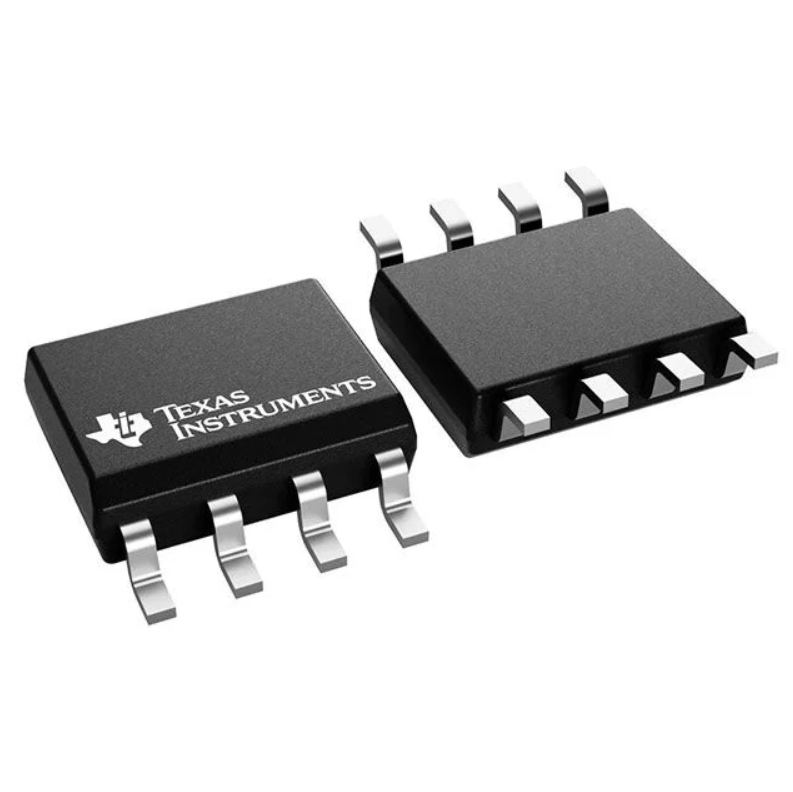
What Is the Can Transceiver SN65HVD230?
The SN65HVD230 is a 3.3 V high-speed CAN transceiver designed to provide the physical-layer interface between a CAN controller and a Controller Area Network (CAN) bus. It is compatible with the ISO 11898-2 high-speed CAN physical-layer standard and supports data rates of up to 1 Mbps.
The chip design to work with 3.3 V microprocessors, microcontrollers, DSPs, and other CAN protocol controllers. The transceiver converts the logic-level transmit and receive signals from a CAN controller into differential CAN bus signals on CANH and CANL.
The device integrates several protection functions to improve reliability in industrial and embedded CAN networks. These include bus-pin ESD protection, thermal shutdown, open-circuit fail-safe operation, and glitch-free power-up and power-down protection for hot-plugging applications.
The component also provides an adjustable driver transition time through the RS pin, allowing the CAN signal characteristics to be optimized for improved electromagnetic emissions performance. Its high input impedance supports CAN networks with up to 120 nodes, depending on the overall network design and bus loading.
SN65HVD230 Pinout
Available in an 8-pin package. Its pins provide the CAN controller interface, power connection, CAN bus differential interface, reference output, and mode control.
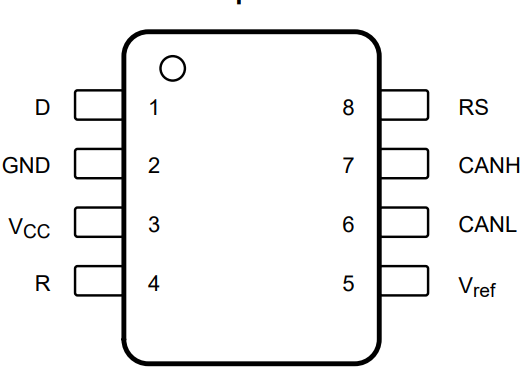
Pin No. | Name | Type | Description |
1 | D | Input | Driver input for dominant and recessive bus states |
2 | GND | GND | Ground connection |
3 | VCC | Supply | 3.3 V transceiver supply voltage |
4 | R | Output | Receiver output to the CAN controller |
5 | Vref | Output | VCC/2 reference output for SN65HVD230 |
6 | CANL | I/O | Low-level CAN bus line |
7 | CANH | I/O | High-level CAN bus line |
8 | RS | Input | Mode-select and driver transition-time control pin |
SN65HVD230 RS Pin
The RS pin controls the operating mode and driver slope of the SN65HVD230. A strong pulldown to GND selects high-speed operation, while different resistance conditions can be used for slope control. The device can also enter its low-power standby mode through the appropriate RS configuration.
SN65HVD230 Features and Specifications
3.3 V Operation: The transceiver operates from a single 3.3 V supply, making it suitable for modern microcontrollers and DSP systems that use 3.3 V logic.
CAN Compatibility: The device is designed to comply with the ISO 11898-2 high-speed CAN physical-layer standard and supports CAN communication at data rates up to 1 Mbps.
ESD Protection: The CAN bus pins provide ESD protection exceeding ±16 kV HBM. This protection helps improve robustness when the module is connected to external CAN wiring.
Network Capacity: Its high input impedance allows up to 120 nodes on a CAN bus, subject to the CAN network's topology, termination, cable characteristics, and other electrical requirements.
Slope Control: The circuit provides adjustable driver transition times through the RS pin. This feature can help reduce electromagnetic emissions in applications where signal-edge control is important.
Low-Power Standby: The component provides a low-current standby mode with approximately 370 μA typical current consumption, making it useful for embedded systems that need to reduce power when CAN communication is inactive.
Protection: Thermal shutdown, open-circuit fail-safe operation, and glitch-free power-up and power-down protection help protect the transceiver during abnormal operating conditions and hot-plugging.
SN65HVD230 Technical Specifications
Table
Parameter | Value |
Supply Voltage | 3V ~ 3.6V |
Data Rate | Up to 1 Mbps |
CAN Standard | ISO 11898-2 |
Typical Standby Current | 370 μA |
CAN Bus ESD Protection | > ±16 kV HBM |
Maximum Nodes | Up to 120 |
Operating Temperature | -40°C~85°C |
CAN Interface | CANH, CANL |
Package | 8-SOIC |
Manufacturer | Texas Instruments |
Number of Drivers/Receivers | 1/1 |
Duplex | Half |
Mounting Type | Surface Mount |
SN65HVD230 Alternative
MCP2551
The MCP2551 is a high-speed CAN transceiver designed to interface a CAN protocol controller with the physical CAN bus. Like the SN65HVD230, it provides differential transmit and receive capability and is intended for CAN communication networks.
One major difference is the supply-voltage environment: the SN65HVD230 is designed specifically for 3.3 V systems, while the MCP2551 commonly use in systems with a higher supply voltage. Therefore, the appropriate replacement depends on the MCU logic levels, supply architecture, package, pin compatibility, and CAN network requirements.
MCP2515
The MCP2515 is often mentioned as an alternative to the SN65HVD230, but it is important to understand that they are different types of devices. The MCP2515 is a stand-alone CAN controller, whereas the SN65HVD230 is a CAN transceiver.
The MCP2515 implements CAN 2.0B and communicates with an MCU through SPI. It includes receive buffers, acceptance filters, masks, transmit buffers, interrupts, and other CAN-controller functions. A system using an MCP2515 normally still needs a separate CAN transceiver to connect to the physical CAN bus.
SN65HVD230 Applications
Industrial Automation: Can use in industrial automation systems where multiple controllers, sensors, actuators, and drives communicate over a shared CAN network.
Motor and Robotic Control: CAN communication is commonly used between motor controllers, sensors, and other control units. The SN65HVD230 provides the physical-layer interface required to connect these CAN controllers to the bus.
Building and HVAC Control: The device can be used in building automation, climate-control, and HVAC systems where distributed control units need reliable communication.
Telecom and Base Stations: CAN interfaces can use for control and status communication between equipment modules. The SN 65HVD230 provides the differential bus interface for these applications.
CAN Networks: The device can be used in CAN-based standards and protocols such as CANopen, DeviceNet, and CAN Kingdom, provided that the complete system meets the requirements of the selected protocol.
SN65HVD230 CAN Module Development Board
The SN65HVD230 CAN module is a compact development board designed to connect a 3.3 V MCU or CAN controller to a CAN network. It provides the physical-layer interface through the SN65HVD230DR transceiver and exposes the controller-side and CAN-bus connections for embedded development and evaluation.
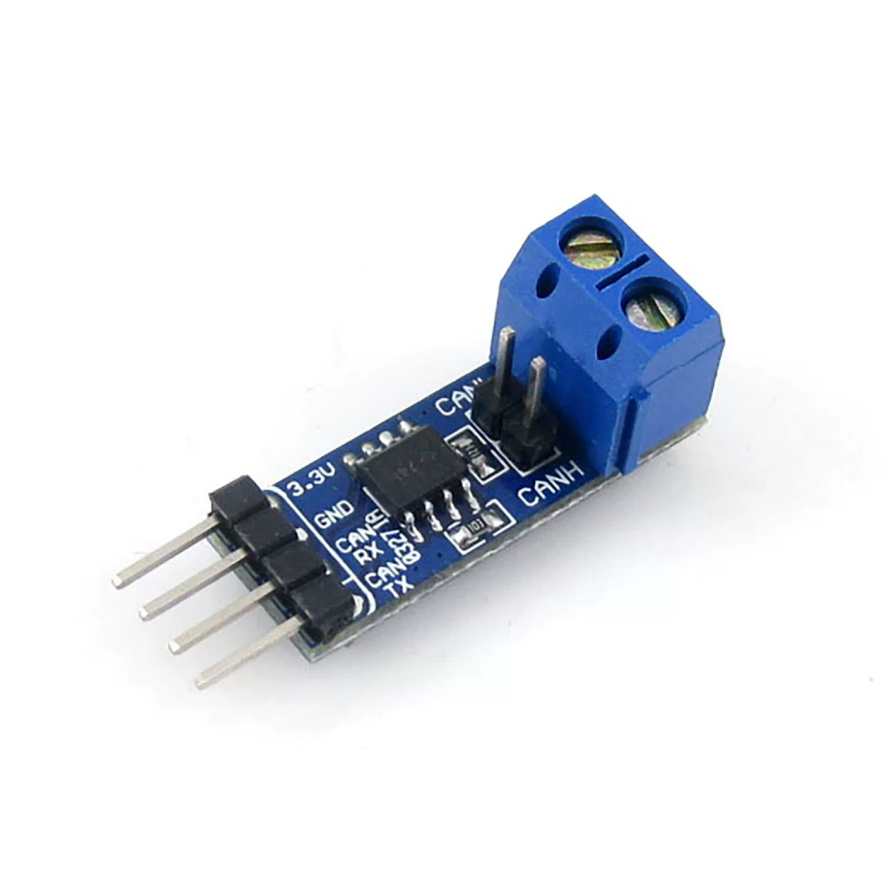
SN65HVD230 Module Specifications
Parameter | Value |
Supply Voltage | DC 3.0~3.6 V |
Low-Level Input Voltage | 0.8 V |
High-Level Input Voltage | 2 V |
Standby Current | 370 μA |
Differential Input Voltage | -6~6 V |
Protection | >16 kV HBM |
Operating Temperature | -40~85°C |
Module Size | 28×10×11 mm |
Module Features
Driver Control: The module uses the transceiver's RS function to control driver transition behavior. This can help optimize signal quality and electromagnetic-emissions performance for the CAN network.
Hot-Plug Protection: Glitch-free power-up and power-down protection allows the transceiver to handle hot-plugging conditions more reliably without unintentionally disturbing CAN communication.
Thermal Protection: Built-in thermal shutdown protection helps protect the device when excessive temperature conditions occur.
Low-Power Design: Operating from a 3.0~3.6 V supply makes the module suitable for many 3.3 V embedded controllers and low-voltage development systems.
CAN Interface: The module provides CANH and CANL differential bus connections, allowing a compatible CAN controller to communicate with other nodes on a CAN network.
Development Applications: Typical applications include motor control, industrial automation, robotics, automotive electronics, base-station control and status systems, and other embedded CAN communication projects.
SN65HVD230 vs MCP2515
The SN65HVD230 and MCP2515 serve different functions in a CAN system. The SN65HVD230 is a CAN physical-layer transceiver, while the MCP2515 is a stand-alone CAN controller with an SPI interface.
Parameter | SN65HVD230 | MCP2515 |
Device Type | CAN Transceiver | CAN Controller |
CAN Version | Physical layer for ISO 11898-2 | CAN 2.0B |
MCU Interface | CAN logic TX/RX | SPI |
CAN Bus Interface | CANH/CANL | Requires external transceiver |
Supply | 3.3 V | 2.7~5.5 V |
Maximum Data Rate | Up to 1 Mbps | Up to 1 Mbps |
Receive Filters | No | 6 filters |
Receive Masks | No | 2 masks |
Receive Buffers | No CAN protocol buffers | 2 receive buffers |
Transmit Buffers | No | 3 transmit buffers |
SPI Interface | No | Up to 10 MHz |
Main Function | Physical CAN bus interface | CAN protocol control |
The MCP2515 includes CAN protocol-management functions such as acceptance masks, acceptance filters, receive buffers, transmit buffers, interrupts, and SPI communication. The SN 65HVD230 instead handles the electrical conversion between the CAN controller's logic signals and the differential CAN bus.
Therefore, these two devices are not direct functional replacements. A CAN system using an MCU with an integrated CAN controller can use the SN 65HVD230 directly as the physical-layer transceiver. A system without a built-in CAN controller can use an MCP2515 together with a suitable CAN transceiver.
Frequently Asked Questions [FAQ]
Can bus module SN65HVD230?
The SN 65HVD230 CAN bus module is a compact 3.3 V CAN transceiver board. It connects a CAN controller to CANH and CANL differential bus lines and supports communication rates up to 1 Mbps. It is suitable for embedded systems, industrial automation, robotics, motor control, and CAN development projects.
What is a CAN transceiver used for?
A CAN transceiver provides the physical interface between a CAN controller and the CAN bus. It converts the controller's transmit and receive logic signals into differential CANH and CANL bus signals and converts received bus signals back into logic-level data for the controller.
What is SN65HVD230?
SN 65HVD230 is a 3.3 V high-speed CAN transceiver from Texas Instruments. It complies with the ISO 11898-2 physical-layer standard and supports data rates up to 1 Mbps. It includes CAN-bus ESD protection, thermal shutdown, fail-safe features, and low-power standby operation.
What is the VP232 IC?
VP232 is generally used to refer to a transceiver or communication-interface device in some module descriptions, but it should not be confused with the SN 65HVD230. When selecting a replacement, verify the exact IC marking, communication standard, supply voltage, pinout, and electrical specifications rather than relying only on a similar module name.
What is the difference between a CAN transceiver and a CAN controller?
A CAN controller handles CAN protocol functions such as message formatting, arbitration, filtering, error handling, and buffering. A CAN transceiver handles the electrical interface between the controller and physical CAN bus. An MCU with an integrated CAN controller typically needs an external transceiver such as the SN 65HVD230.
What is a CAN bus transceiver module?
A CAN bus transceiver module is a small circuit board that integrates a CAN physical-layer transceiver with supporting components and connectors. It allows a microcontroller or CAN controller to communicate over CANH and CANL. The SN 65HVD230 module is an example designed for 3.3 V CAN systems.
Conclusion
The SN65HVD230 is a compact 3.3 V high-speed CAN transceiver designed to connect CAN controllers with ISO 11898-2 CAN networks. With support for data rates up to 1 Mbps, high ESD protection, thermal shutdown, fail-safe operation, hot-plug protection, and adjustable driver transition times, it is suitable for many embedded and industrial CAN applications.
For systems using an MCU with an integrated CAN controller, the SN 65HVD230 provides the required physical-layer interface to CANH and CANL. In contrast, devices such as the MCP2515 provide CAN-controller functionality and generally require a separate transceiver. Selecting between these devices therefore depends on whether the system needs a CAN-physical interface, a CAN-controller, or both.
Read More:
1. CC1101 Wireless RF Transceiver Module Board Guide
2. CP2102 USB to UART Converter Module Guide
3. TJA1050 Transceiver Pinout, Applications and Can Bus Module
SN65HVD230 Datasheet PDF:
HOT NEWS
TP4056 Charging Module Pinout, Working, and Applications
TP4056 Charging Module Pinout, Working, and Applications
2026-01-23
LR41 Battery Guide: Specifications, Equivalents, and Uses
LR41 Battery Specifications, Equivalents, and Uses
2025-12-14
Understanding A 0603 Resistor
0603 resistor,dimensions,marking code, values
2025-05-29
MT3608 Boost Converter - An In-Depth Guide
MT3608 Boost Converter
2025-09-04
The 0402 Resistor: A Comprehensive Guide
0402 Resistor
2025-05-06
Complete Guide to the 220 Ohm Resistor
220 Ohm Resistor
2025-07-28
What Is A 1206 Resistor?
1206 resistor dimensions,footprint,value
2025-06-05
Guide To The XL6009 Boost Converter
XL6009 Boost Converter
2025-09-05
Understanding The CD4051 Analog Multiplexer
CD4051 analog multiplexer
2025-06-30
120 Ohm Resistor- Specifications, Applications, and Features
2025-05-12